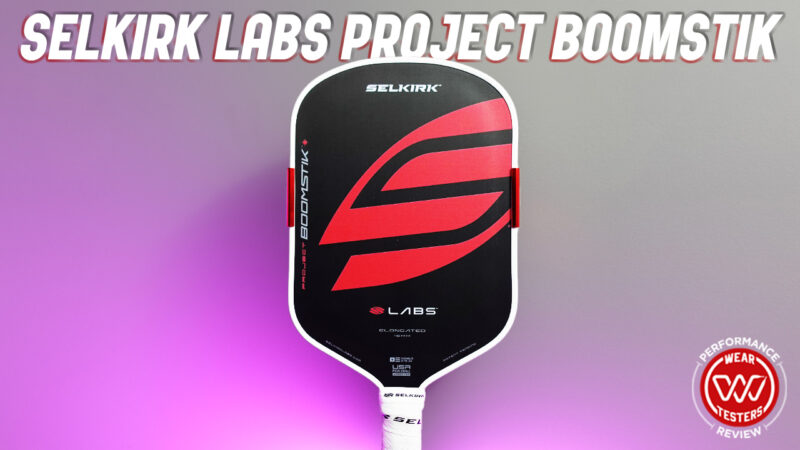
After more than a year of development and revision, Selkirk has released the paddle to define a new era for the brand ( and also a follow up to what was basically a soft launch in the SLK Era pickleball paddle) to the masses, the Selkirk Labs Project Boomstik.
WearTesters had the unique early opportunity to experience and play test the Selkirk Labs Project Boomstik where it all began for Selkirk — the Couer de’Alene, Idaho area. Since that time, the Project Boomstik (Elongated) has seen lots of testing — from immediately after redeye flights, through sinus infections, and more [Editor’s Note: now that’s dedication].
So what’s the deal with the Selkirk Labs Project Boomstik? Let’s find out with a WearTesters pickleball paddle performance review.
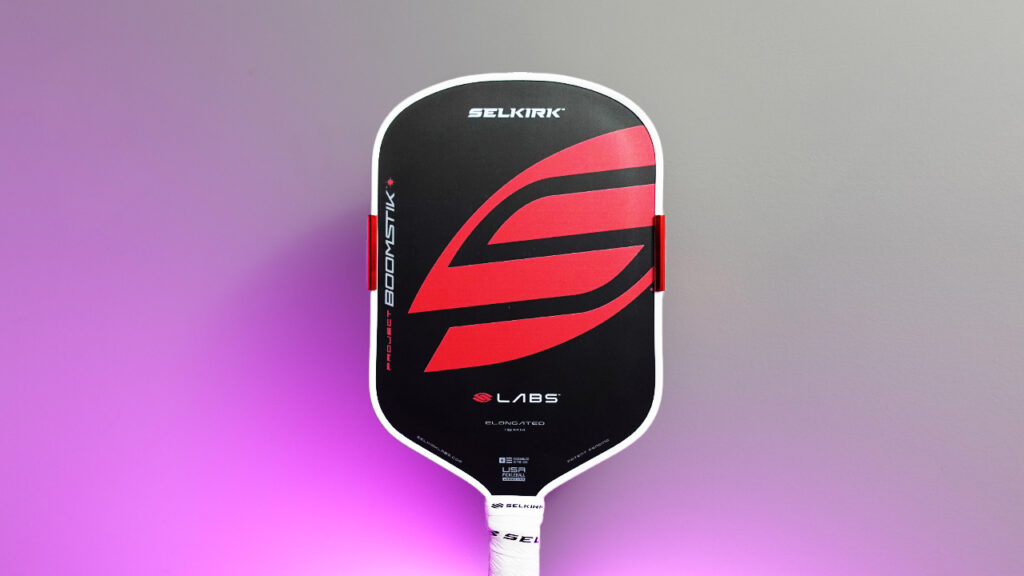
Selkirk Labs Project Boomstik Key Details
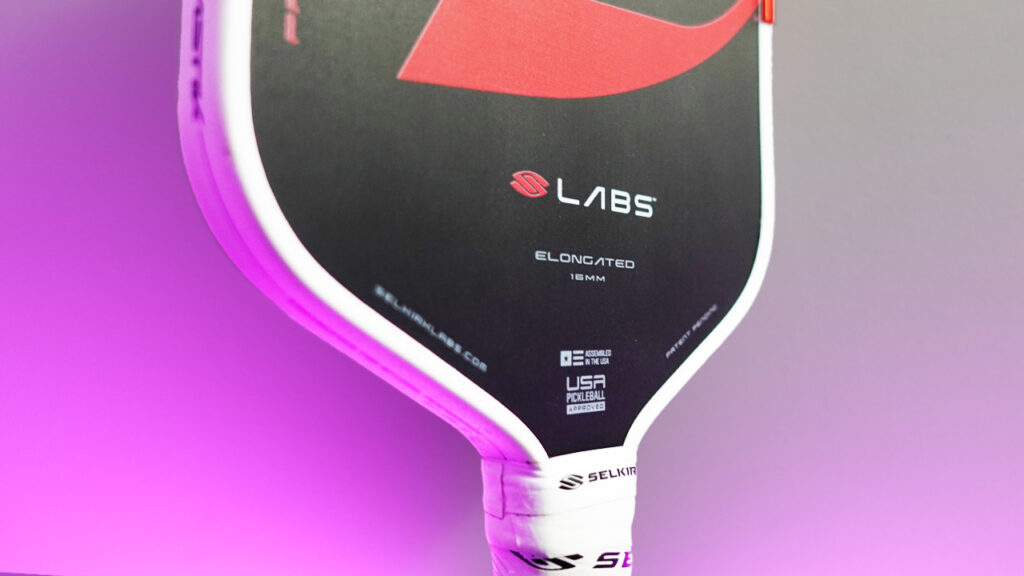
- Two shapes: Elongated (this review is based on my experience with this shape) and Widebody
- Core: BoomCore (PureFoam EPP fused with EVA power perimeter, 16mm thickness)
- Hitting Surface: 3 layer Multistrata T700 carbon fiber + Selkirk Infinigrit surface (up to 3x longer lasting grit compared to raw carbon fiber for lasting spin potential)
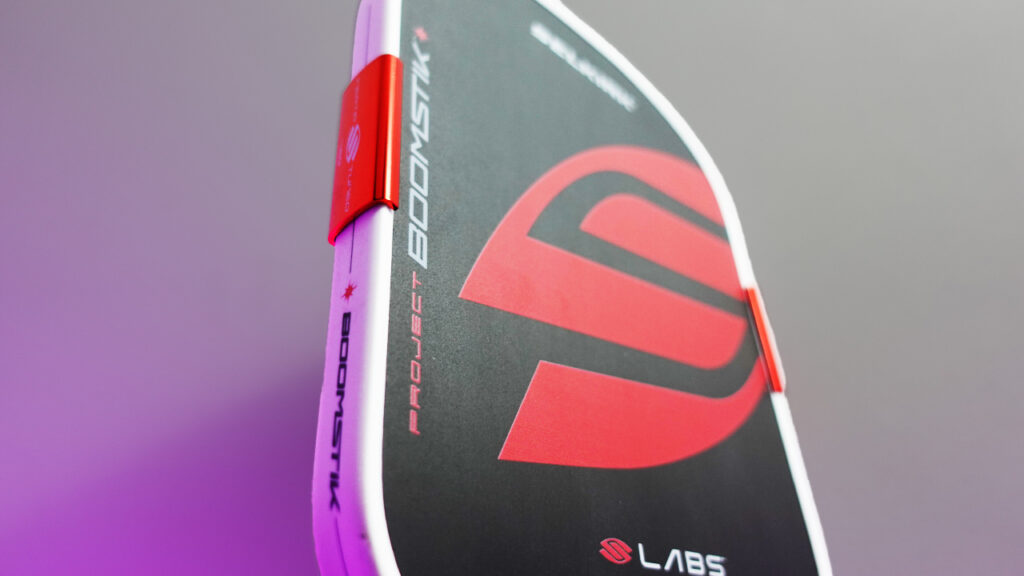
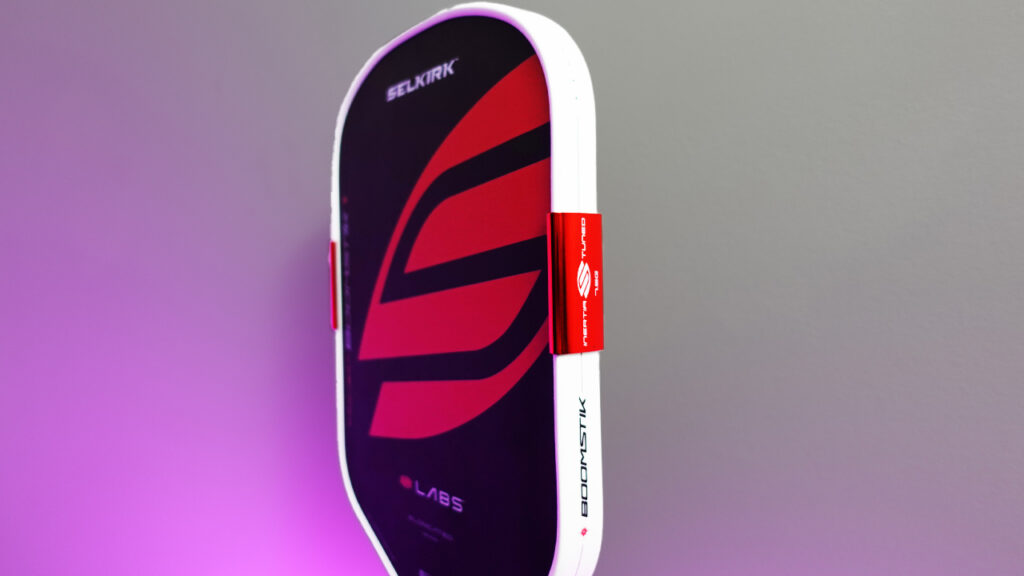
- MOI Tuning System (semi-permanent weighting out of box to maximize sweet spot and balance point)
- Selkirk Labs Limited Lifetime Warranty (Covers handle, edge guard, paddle face, and end cap cracks and any damage not resulting from abuse or neglect)
- Retail Price: $333
How does the Selkirk Labs Project Boomstik perform?
Simply put, this paddle is powerful and lives up to its name. From groundstrokes to volleys, the Project Boomstik picks up pace due to a culmination of the features listed above, including the balance point aided by the MOI tuning system, BoomCore, and shapes (elongated allows for more driving power and wide body allows more pop).
It also produces ball spin at a high rate, which helps to shape shots to throw opponents off while also increasing chances of keeping the ball inbounds when executed properly. In addition, for a player like me that often shines in defensive situations, I was extremely surprised at the controllability of the paddle when playing among equal skill level players.
From the baseline, I fielded good results overall with the Project Boomstik. However, I did see where I have room to improve in some cases using the paddle. Serves and returns were consistently deeper, and I was able to hit more third and fifth shot drops with efficiency compared to other paddles. I surmise this came from the extra bit of pop the Boomstik provides. Yes, I did pop a few balls too high on occasion, notably when under attack, but I would take the success rate of this paddle from the baseline over most.
I fared even better with the Project Boomstik at midcourt/transition zones with drops and resets. Some of this is due to experience and better court positioning, but the fashion in which I was able to execute in transition is a credit to the paddle and its forgiving nature as well.
Up towards the non-volley zone is where the Project Boomstik really shined, especially from a defensive perspective. While I can’t say that I was any more or less successful initiating speed ups, I absolutely found success winning hands battles with counter attacks. Playing a softer game, I was also a lot more comfortable with more aggressive dinks and had an easier time with placement. The Selkirk Labs Project Boomstik essentially performed surprisingly balanced in all aspects of the game for it to be such a powerful paddle.
Who is the Selkirk Labs Project Boomstik best suited for?
What I find most important when considering the Boomstik is self awareness as a player — if you are a beginner or haven’t had much experience in intense rallies or hands battles, a paddle that produces this much ball velocity can be a physical hazard to opponents.
A paddle as powerful as the Project Boomstik certainly leans heavily in favor of advanced players, but I respectfully disagree with limiting it to specific skill levels like 4.5 or above. The Boomstik, in my opinion, is forgiving enough for advancing intermediate players to keep under control especially when playing at the pace of equally skilled opponents.
The feel of the Boomstik should also be noted. The EPP core does have a somewhat hollow feel that some may not like. It’s something I notice but quickly became used to, however it may not be for everyone. Aside from that, if you aren’t opposed to spending roughly $50 over currently comparable top power paddles for a consistent and durable unit backed by a limited lifetime warranty (and thorough R&D and quality control that I’ve gotten a first hand look at), look no further than the Selkirk Labs Project Boomstik.
Disclosure
While Selkirk did provide the Selkirk Labs Project Boomstik Elongated to facilitate this review, the company had no involvement in this review, didn’t receive an advance look at it, and has not attempted to influence it.