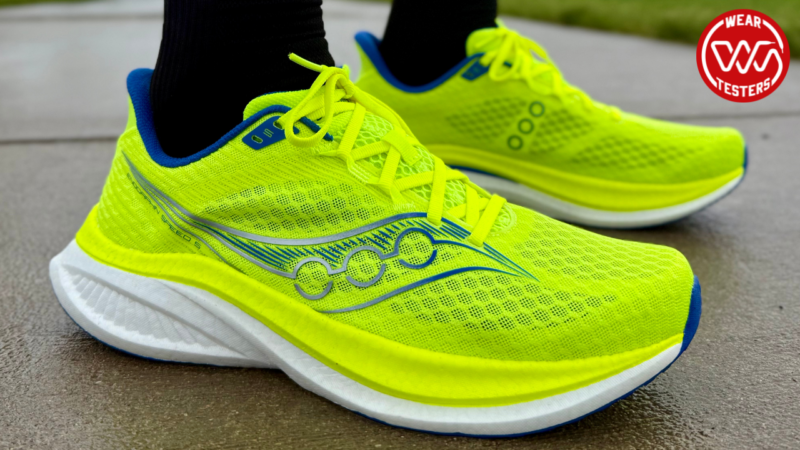
The Endorphin Speed line is one that makes me wonder where all the time has gone. I remember reviewing the original in July 2020, and it doesn’t seem like five years ago. Since then, that OG Endorphin Speed has achieved near-iconic status. The Saucony Endorphin Speed 5 is even being released in a colorway that pays homage to the White/Mutant color scheme that launched the Endorphin line.
But the original Endorphin Speed was introduced in a different time. Has Saucony made enough improvements to keep up in the ever expanding running shoe arms race? Let’s find out.
Saucony Endorphin Speed 5
Release Date: June 15, 2025
Price: $175
Men’s Weight: 8.3 oz. / 237 g
Women’s Weight: 7.2 oz. / 204 g
Drop: 8mm (36mm heel, 28mm forefoot)
Sizing: True-to-size
- Rundown: The Saucony Endorphin Speed 5 is like the US economy in that it’s fallen on hard times after an absolutely stellar run.
Pros
- Comfortable and breathable upper
- Efficient forefoot geometry
- Pace versatility (if the overall geometry agrees with you)
Cons
- Rearfoot design imposes odd support for some footstrikes
- Midfoot traction so-so in messy conditions
- Poor outsole durability (for larger runners)
- Downgrade in materials
- Price seems steep in today’s market
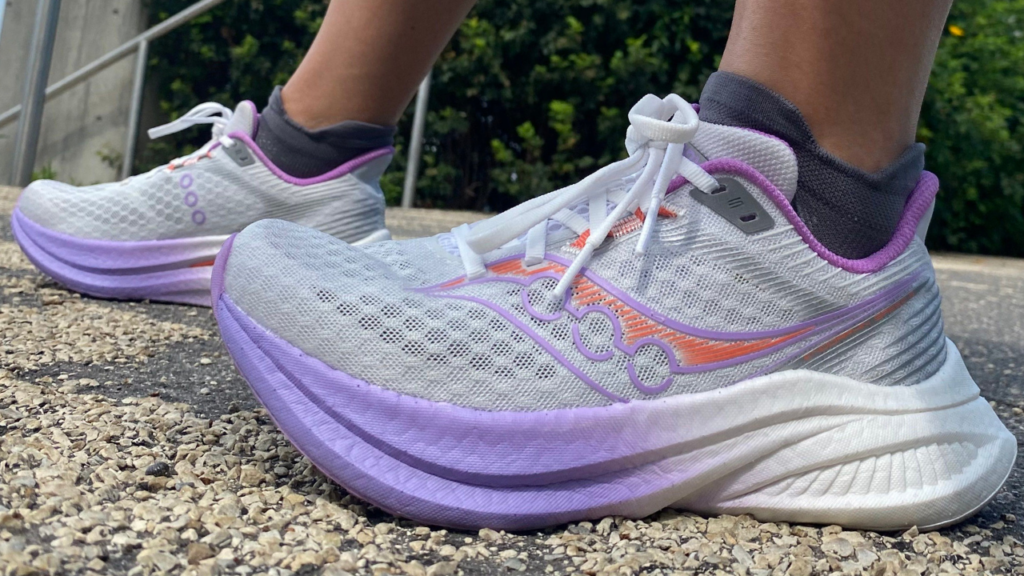
What is the Saucony Endorphin Speed 5?
Saucony says, “[t]he Endorphin Speed 5 is built to go fast and feel smooth—whether you’re pushing the pace on track night with friends or you’re chasing a PR. A newly designed nylon plate and responsive PWRRUN PB cushioning come together for snappy transitions and a fast ride. This is speed you can count on.”
We appreciate the nods to speed and smoothness as both are always well received. Also enjoyable is the part about trying to beat your friends on track night. Appealing to people’s competitive side is an A+ way to sell shoes. Nice job, Saucony marketers.
Cushion
Annie: The only other Endorphin Speed I’ve run in is the Endorphin Speed 3 (and even then, it’s been a minute). So Drew will have to be our guide when it comes to Speed 4 comparisons.
But for my part, I remember being surprised by the softness of the Speed 3 and then equally surprised by its ability to pick up the pace (and hold it steady) in the midst of that softness. In my mind’s eye, it had a vaguely gliding sensation and sneaky responsiveness.
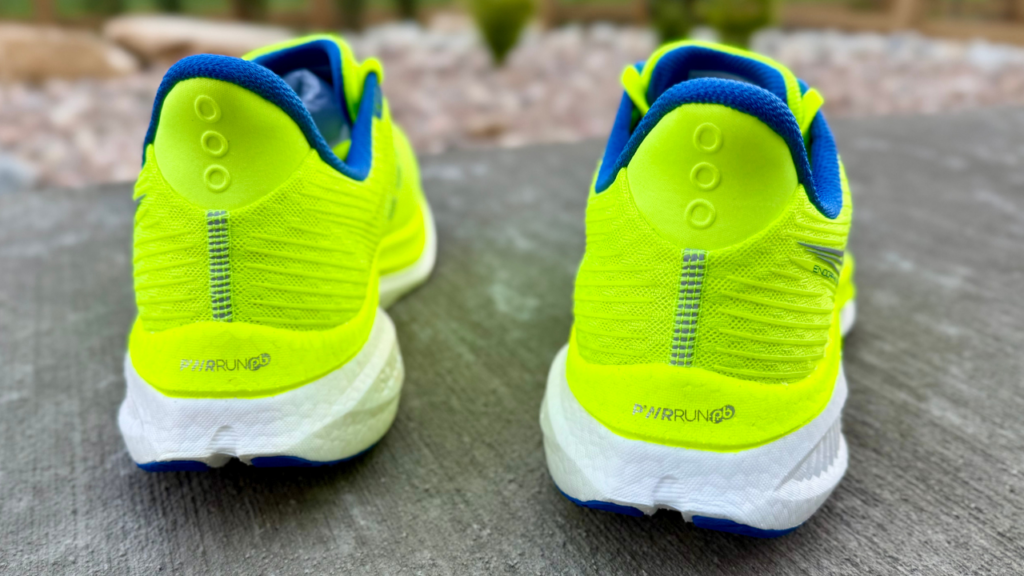
While not intensely firm underfoot, the PWRRUN PB midsole in the Saucony Endorphin Speed 5 has less of the softness I recall in the Speed 3. This denser but springy foam still combines nicely with the SPEEDROLL geometry for a ride that gets me quickly into a swift toe-off. It’s a feeling of general efficiency rather than a gliding one characterized by squish.
I didn’t find the nylon plate all that noticeable from a direct sensory perspective, though I eventually did feel the overall setup grow firmer beneath the forefoot as I got deeper into runs. I most enjoyed the midsole on days when I was feeling a bit fresher, but I’ll get into the (suspected) reasons for that in the Support section below.
In any case, this setup provides the type of ride experience that checks a lot of boxes. The flip side is that it didn’t blow me away with top-level prowess at any single task. But that jack-of-all-trades/master-of-none personality is undoubtedly some of the Saucony Endorphin Speed 5’s appeal.
Drew: Annie’s lucky that she got experience with the best Endorphin Speed ever, the Endorphin Speed 3. But that’s bad for the Endorphin Speed 5 because the midsole doesn’t measure up. The Endorphin Speed 4 changed geometry a bit, and Saucony reworked the nylon plate; but it ultimately felt similar to the Endorphin Speed 3—which was a good thing because it was a very pleasant underfoot experience.
But now, well, the Saucony Endorphin Speed 5 feels kinda muted and sorta firm. The nylon plate changed again, and maybe some of the extra stiffness below the toes is from that change; but the PWRRUN PB doesn’t feel as thick or as protective.
The midsole feels like a speed shoe built for younger legs where groundfeel is heightened at the expense of impact protection. It’s an ok experience, just not what I expect from an Endorphin Speed.
Support
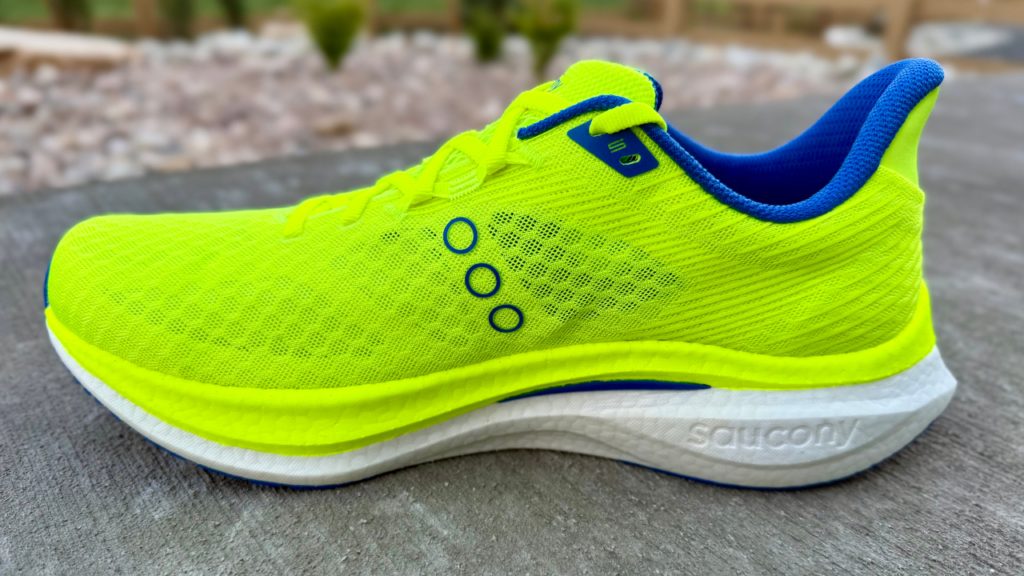
Annie: I’m not sure whether it’s a function of the signature Saucony sculpting in the rear portion of the footbed, the flare of the midsole at the heel (especially medially), the nylon plate’s medial wing, or if it’s simply a result of the 8mm drop (or all of the above), but I occasionally felt interference from the back portion of the shoe. It felt like the Saucony Endorphin Speed 5’s heel design was offering hints of guidance and support that didn’t necessarily agree with my stride all the time.
In fairness, it was most apparent on days when I was more sluggish. So my (presumably) shifting footstrike may have had something to do with it. But regardless, I think the way the heel is designed may better cater to a few different types of runners: true heel strikers; those who live more up toward the forefoot (and therefore miss the heel entirely); and/or those who appreciate a bit of rearfoot, medial support in their nylon-plated trainers.
My nebulous, moving target of a mid-ish footstrike may have combined unfavorably with the medial sculpting, which seems to guard ever-so-slightly against overpronation. I wonder if I escaped this feeling in the Endorphin Speed 3 simply because I was better able to compress the foam in that version.
But I’ll be very interested to hear what Drew has to say here because this is an area where our size and strength disparity, how we interact with foams and support features, and our general preferences all tend to produce different experiences.
Drew: I actually felt the same thing as Annie. When I got tired and let my feet go all willy nilly, whatever the Saucony Endorphin Speed 5 was doing accentuated that excess motion and made the tendons around my ankle feel not so great.
When walking in the Endorphin Speed 5, the midsole seems to wrap around my heel leaving it almost inside a cup. It’s a weird feeling, and I bet that’s what is annoying me when my form degrades.
This combo of odd support and firmer midsole didn’t let me take the Endorphin Speed 5 very long thus negating a hallmark quality of its predecessors.
Traction
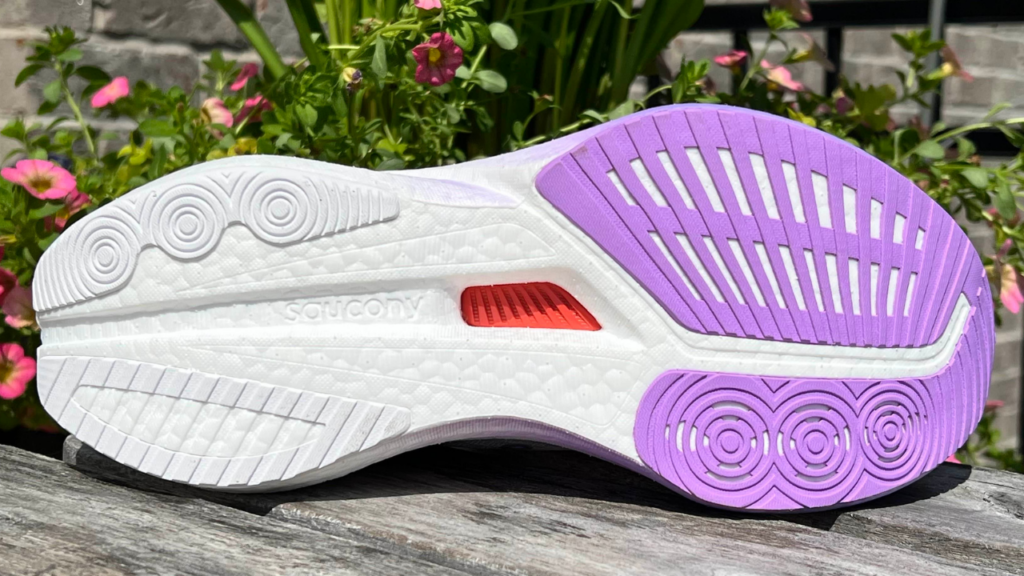
Annie: The outsole has rubber coverage in essentially four main sections. There is a repeating circular pattern on the portions at the medial forefoot and lateral heel and a sort of radiating bar design at the lateral forefoot and medial heel. The rest of the outsole (which is basically the entirety of the midfoot) is exposed PWRRUN PB. There’s also a central groove intended to provide more flexible transitions through which you can see the nylon plate.
The grip was pretty solid on dry roads, and the rubber appears to have perhaps average-ish durability following the testing miles (though I’m not particularly rough on outsole rubber). While traction wasn’t outright bad during rainy runs, I didn’t love how the midfoot portion of the outsole felt on slicker surfaces, especially if changing direction at all while traversing those spots.
We’re no strangers to exposed foam and cutouts on outsoles around here. I’ve just had better traction in other shoes with a similar approach to the midfoot coverage, for example, the New Balance FuelCell Rebel v5. For that reason, the Saucony Endorphin Speed 5 wouldn’t be my first choice for attempting speed in messy conditions, despite it having more horsepower under the hood (at least for my running style) than the most recent Rebel.
Drew: While the Endorphin Speed 4’s traction wasn’t impressively durable by any means, the Saucony Endorphin Speed 5’s outsole, especially the medial forefoot, is a durability disgrace. I’m tearing through it rapidly and don’t think it will provide much longevity of traction.
The traction itself was ok. Wet/dry transitions could be dicey, but overall, the grip was fairly reliable.
Upper
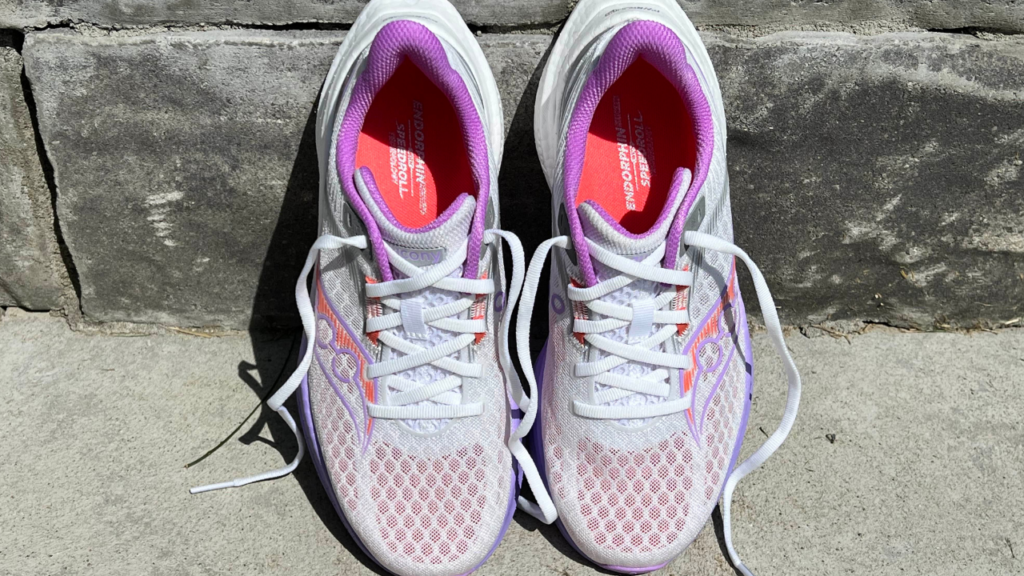
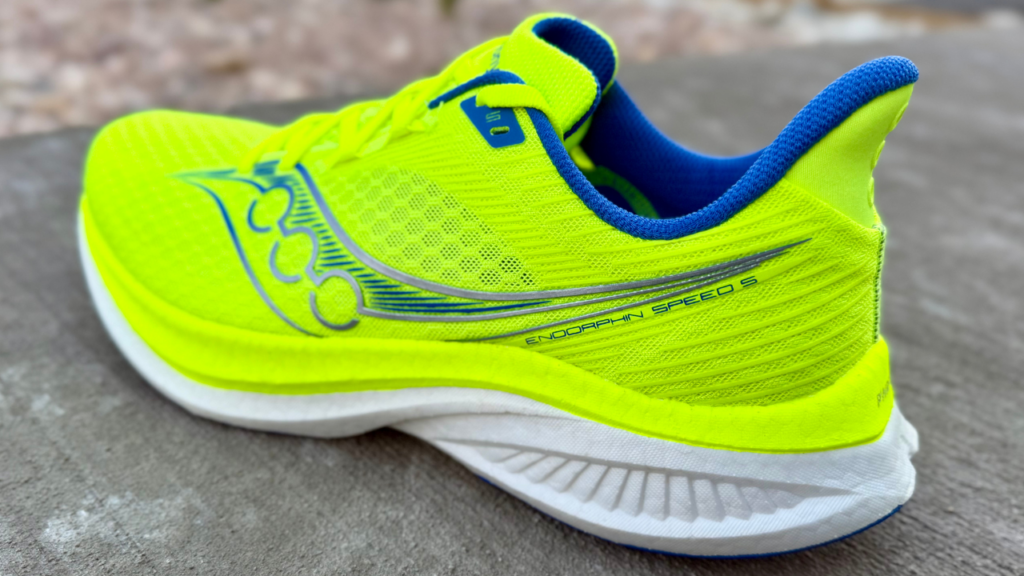
Annie: The upper material is an engineered mesh with hexagonal shapes that allow for lots of airflow around the front two-thirds of the shoe. The tongue is fully gusseted, lays nicely over the foot, and stays in place. There’s a noticeable heel counter, and the heel collar comes up somewhat high at the back. But the collar has a measured amount of padding and angles in such a way that it didn’t cause me any issues at the Achilles. But its height is something to be aware of if you have sensitivities in that area.
The upper is overall very comfortable and breathable. I didn’t require a runner’s knot for heel security, though I did need to cinch the laces throughout the eyelet chain more than expected in order to get the hold I wanted through the midfoot. But even with cinching, I didn’t experience any lace pressure. The tongue has sensible padding, and the rest of the upper came to flex nicely with my foot, ensuring I remained secure without being restricted.
Drew: Breathability is high and the gusseted tongue comfortable, but the Saucony Endorphin Speed 5’s upper feels way less premium than the uppers of the Speed 3 and Speed 4. It’s rough to get a downgrade in materials and have the price go up.
That said, the toebox and midfoot did get roomier which addresses my biggest complaint with the Speed 4.
Is the Saucony Endorphin Speed 5 wide foot friendly?
Annie: Knowing the Endorphin Speed 4 had a reputation for being a bit narrow in the toebox, I was pleasantly surprised to find a relatively accommodating fit through the lateral ball of the foot (my usual problem area) in the Endorphin Speed 5. And the mesh upper doesn’t have loads of structure through the forefoot which further aids with comfort for those of us who need more room there. The width otherwise feels fairly average through the midfoot and heel.
Even with my positive experience in the forefoot, I still think it’s going to be best for wide-footers to try on the Saucony Endorphin Speed 5 for themselves; because what seems like enough room at first may not be once you’re deep into your longest training runs. I’m currently rebuilding my own mileage and have some doubts as to whether the forefoot would hold up over my previous long runs of multiple hours, for example.
Drew, how did the fit work for you? Do we know if Saucony has any plans to release a wide version?
Drew: The Saucony Endorphin Speed 5 is probably the friendliest of the Endorphin Speeds to date. I agree with Annie in that I’d recommend most wide-footers try it on, but it appears that Saucony has heard the complaints here and is working to rectify them.
Is the Saucony Endorphin Speed 5 worth $175?
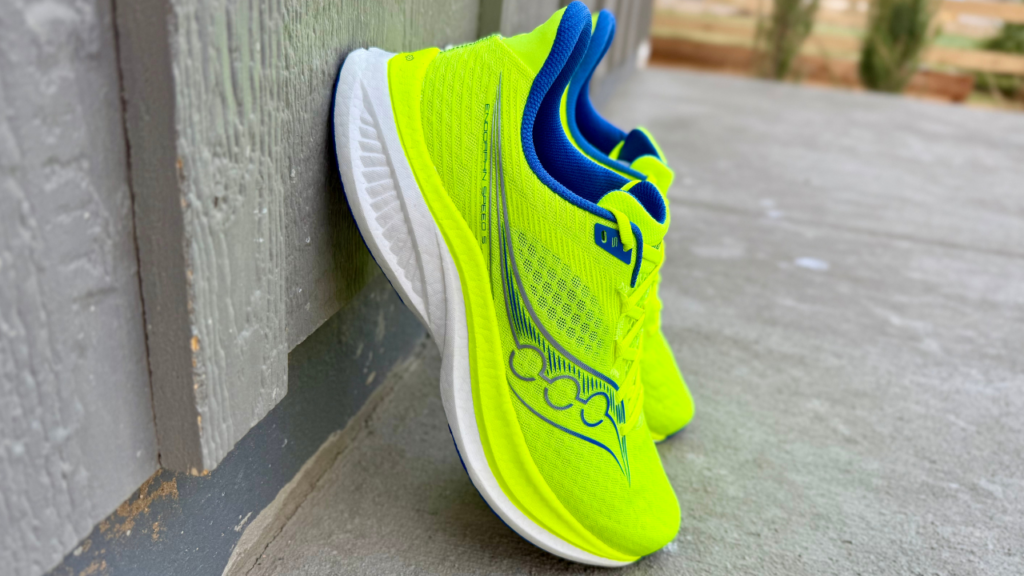
Annie: Ultimately, I think the value is mostly there when the Saucony Endorphin Speed 5’s specs are compared to the rest of what’s out there…at least on paper. But this is a shoe—and a price—that definitely got me thinking…
I wrote earlier about the jack-of-all-trades versatility of the Endorphin Speed 5 and how that is (historically) a huge part of the line’s appeal. It’s certainly a quality we celebrate—particularly with shoes like the adidas Adizero Evo SL, the ASICS Novablast 5, and the New Balance FuelCell Rebel v5. But each of those examples costs $25 to $35 less than the Endorphin Speed 5. And that’s one difficulty the Endorphin Speed line faces in today’s market. It’s just tricky when contextualized in that way.
However, the argument can also be made that the Endorphin Speed 5’s airy upper, foam, and nylon plate should take it over the price band of those other, non-plated daily trainers. As we already mentioned, the Endorphin Speed 5 does bring more speed to the table than the Rebel v5, for example. And furthermore, at 5’0” tall, I don’t necessarily always need all the extra stack height of the even pricier max-cushion super trainers on the other end of the spectrum that regularly hit $200 (though the rearfoot design here renders the Speed 5 a no-go for my long-run needs).
When it gets down to it, the most natural comparisons to the Endorphin Speed 5 are really shoes like the adidas Adizero Boston 13 ($160) and the Nike Zoom Fly 6 ($180). Personally, that makes me want to see a Speed 5 price that’s lower. But it also means Saucony isn’t egregiously off the mark…technically.
Drew: Annie listed four shoes that are less expensive than the Saucony Endorphin Speed 5. I’d choose to run in all four of them before the Endorphin Speed 5. I’d also choose to pay the extra $5 and run in the Zoom Fly 6. And from Saucony’s own lineup, I’d easily justify paying the extra $5 to run in the Endorphin Trainer.
I just don’t see $175 worth of value in the Saucony Endorphin Speed 5. Maybe $145…maybe.

How to use the Saucony Endorphin Speed 5
The Saucony Endorphin Speed 5 can be used for a wide variety of daily training runs and especially shines on those uptempo efforts and sessions where efficient turnover is key. It’s also a viable race-day option for those who prefer more flexible, less aggressive nylon plates (compared to carbon fiber) and additionally for those who want a slightly firmer, more stable ride than most carbon racers typically provide.
Saucony Endorphin Speed 5 Summary
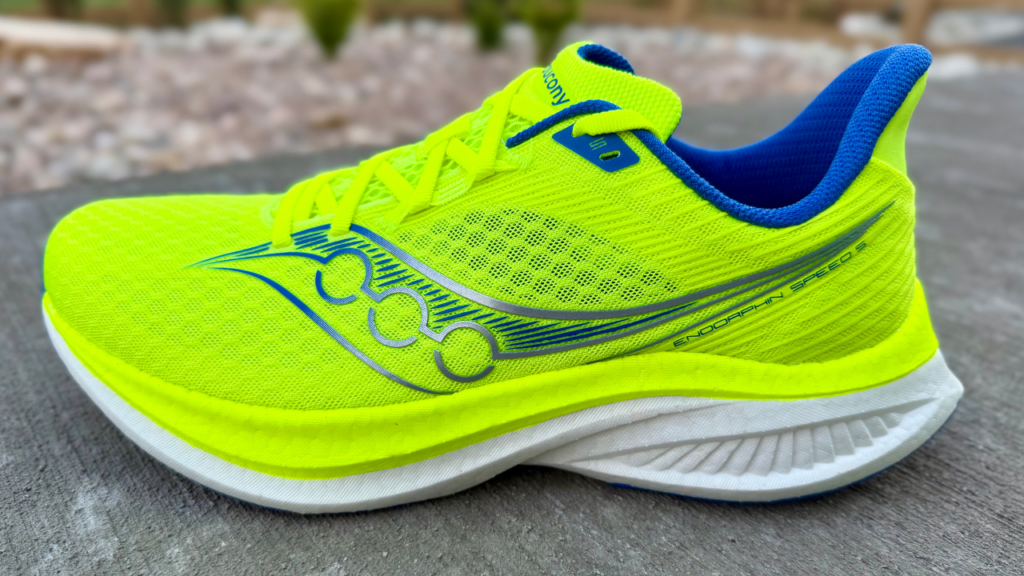
Annie: While the rearfoot design and a few other factors weren’t a match for my stride, I enjoyed some of my miles in the Saucony Endorphin Speed 5 and can see its potential appeal. I’d love to see the price come down and for Saucony to reexamine why and how the original vision for the Endorphin Speed helped break the mold in performance running.
But the Endorphin Speed 5’s airy upper, efficient geometry (if it agrees with you), and versatile pace capabilities (again, if it agrees with you) make it at least worthy of consideration for those looking for a do-it-all shoe with a denser feel. The Saucony Endorphin Speed 5 is definitely a shoe that requires the ability to test it out for yourself to determine compatibility—or incompatibility.
Drew: The Saucony Endorphin Speed 5 is the worst Endorphin Speed to date, especially for larger runners like myself. The combo of price point, mediocre materials, and a subpar underfoot feel make it a hard pass for me.
How does the Author Run?
Drew Whitcomb (age 43, 6’6″ 200lbs): Runs daily with a once a week rest day. Runs a lot of miles due to testing needs and a growing affinity for long-distance races. Regularly competes in marathons, half-marathons, 10k, and 5k races.
Annie Keris (age 39, 5’0” 117lbs): Typically follows a “two days on, one day off” running routine. “On” days include daily miles, speed work, and long runs. An “off” day usually involves yoga and mobility/recovery work. Enjoys occasional racing but perhaps enjoys the training process even more. Gravitates most toward the half marathon distance, but ventures into the 10k and 5k as well. The marathon is thus far uncharted territory…
Disclosure
While Saucony did provide a pair of the Endorphin Speed 5 to facilitate this review, the company had no involvement in this review, didn’t receive an advance look at it, and has not attempted to influence it.