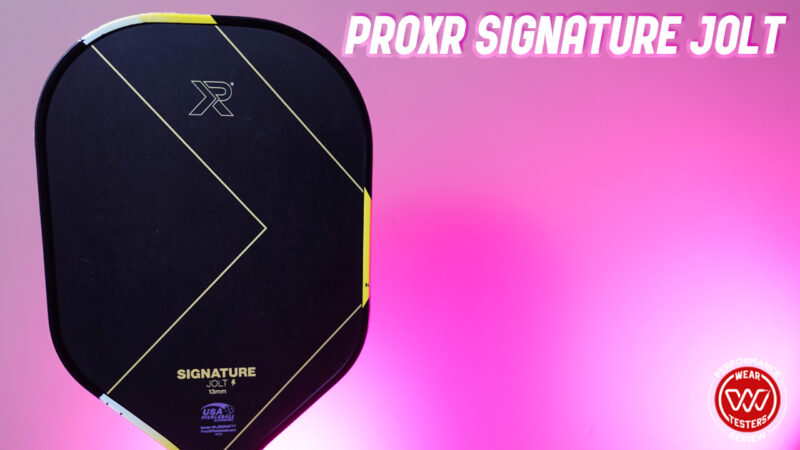
After a successful collaboration with footwear brand SQAIRZ on the XRZ pickleball shoe, ProXR continues to evolve its Signature paddle line with its fourth iteration, the ProXR Signature Jolt.
The ProXR Signature Jolt went from not quite my steez [Editor’s Note: TIL that’s teen slang for style] to a paddle I ended up having a bit of fun and success with.
So, how did we get here? Let’s find out with another pickleball paddle performance review.
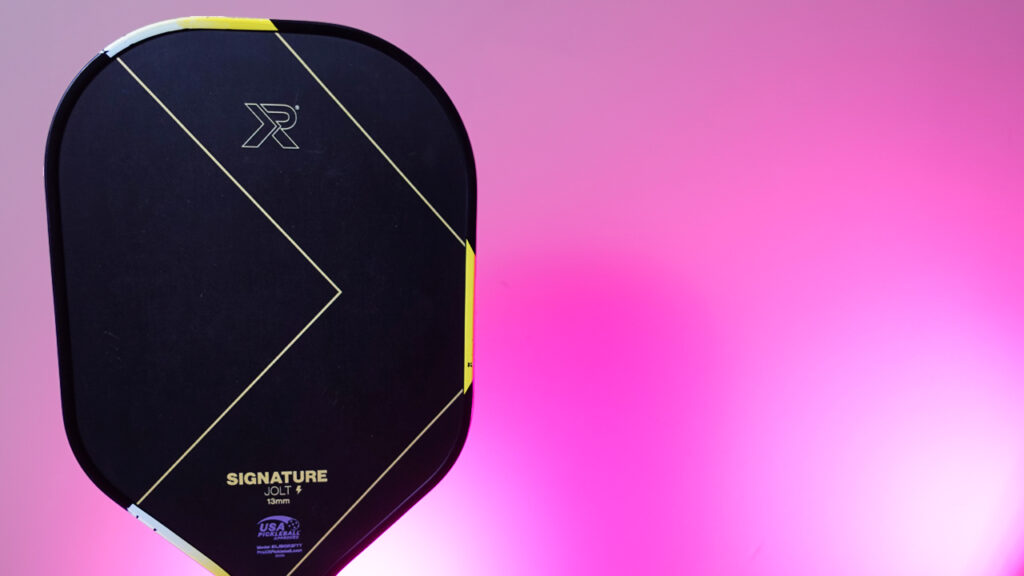
What is the ProXR Signature Jolt?
The ProXR Signature Jolt series takes most of the dimensions of its predecessor, the ProXR Signature Series 3 and turns things up a notch. The Signature Jolt’s retail price is $119.99.
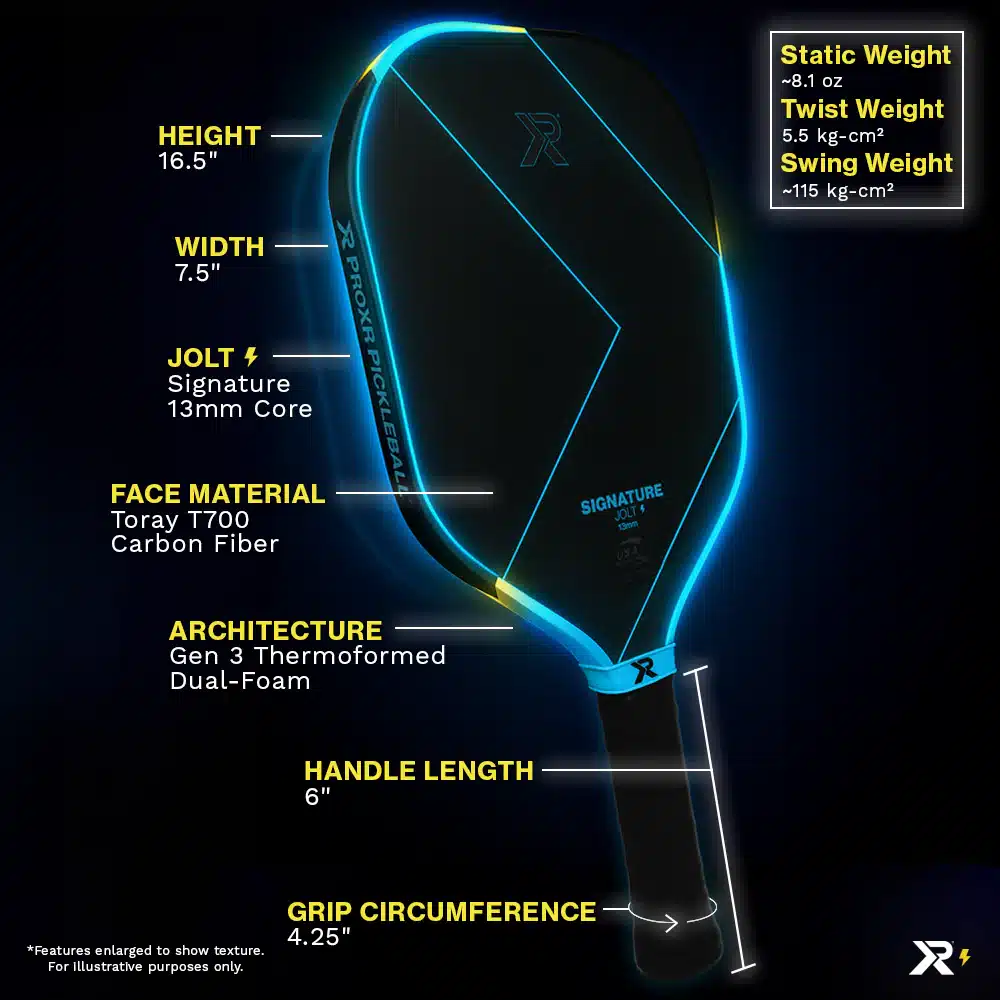
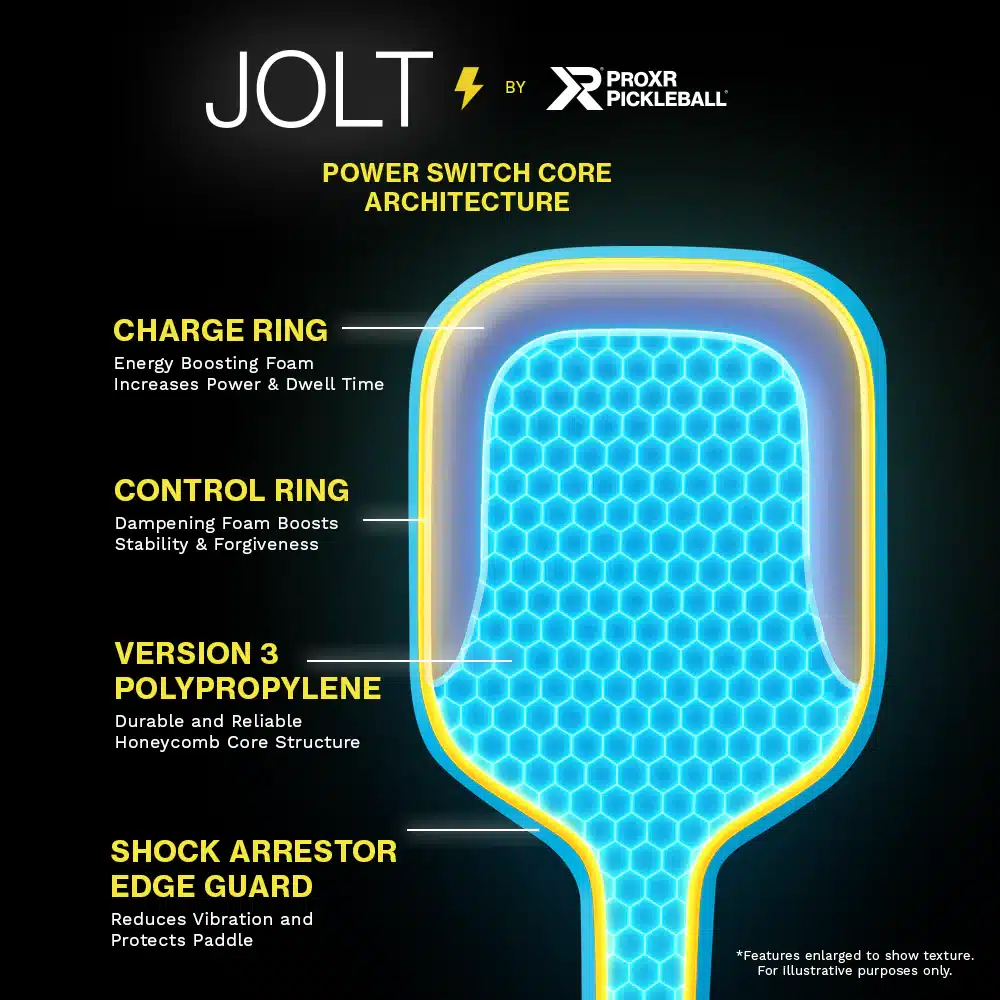
Images via ProXR
How does the ProXR Signature Jolt perform?
It honestly took a while for me to not only adjust to this paddle — but also begin to enjoy its use. For the majority of my time testing the Signature Jolt, the sweet spot and controllability felt average at best with a noticeable drop-off when hitting the ball off-center. I also felt as if the paddle was lacking a bit in power, feeling as though I really had to push through the ball with a lot more effort, yet still with underwhelming results.
I believe I needed a bit more time to adjust to the feel of the Signature Jolt after extensive testing with the full foam core Selkirk Labs Project Boomstik and rotating through other foam core paddles like the Vatic V-Sol Pro and Ronbus Quanta paddles (performance reviews on both coming soon). Pickleballs pop off the face of it, but not quite as crisp as some of the slightly stiffer foam paddles that I prefer.
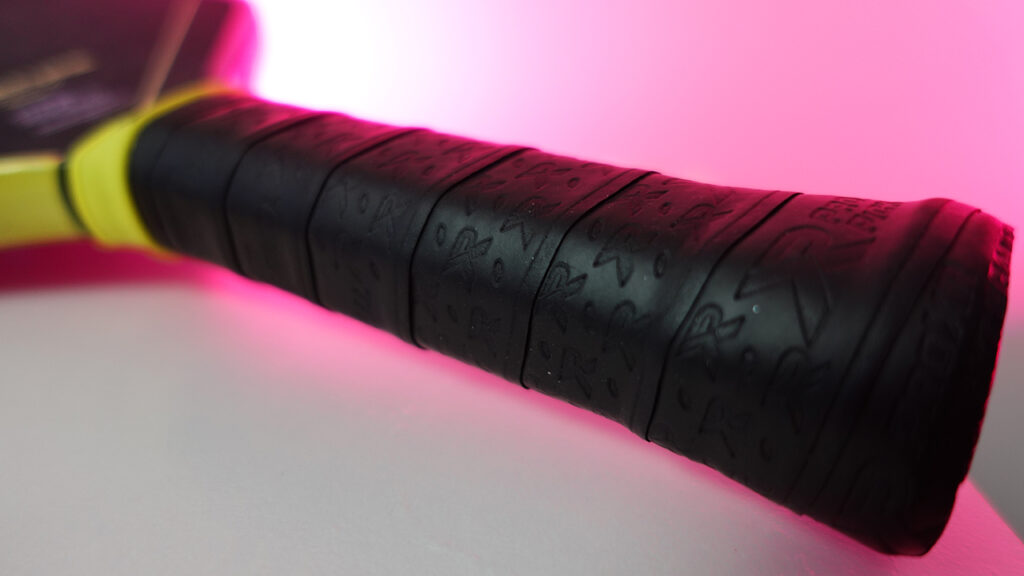
From the kitchen line, the Jolt performed better with time to adjust, especially on flicks and rolls. The six inch handle allows for better ability to generate spin and also catch the ball out in front at good angles. During latter sessions of testing this was especially helpful with aggressive placement when countering speed-ups.
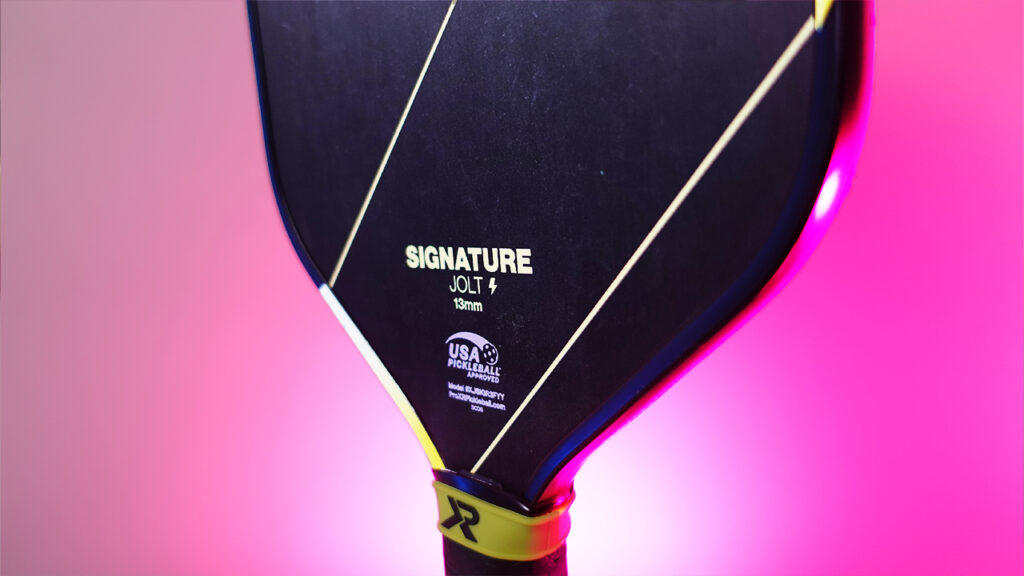
Transition zone performance was best without any added weight. I started out with the Jolt stock, then added roughly 0.2 ounces to each side around 9 and 3 o’clock positions, and after not being satisfied with my resets transitioning forward I removed the weight and returned to stock where I felt I got the best performance over time.
As I think about why I went back to stock, I believe this is one of those Gen 3 paddles that becomes hotter (more powerful) over time until it breaks. This would make sense as ProXR’s packaging includes a disclaimer about the Jolt’s potentially shorter lifespan in exchange for explosive power resulting from this type of paddle construction. My Jolt has not broken, but I certainly feel as though my pace and depth from the baseline has significantly improved from earlier testing, with or without extra weight.
Who is the ProXR Signature Jolt best suited for?
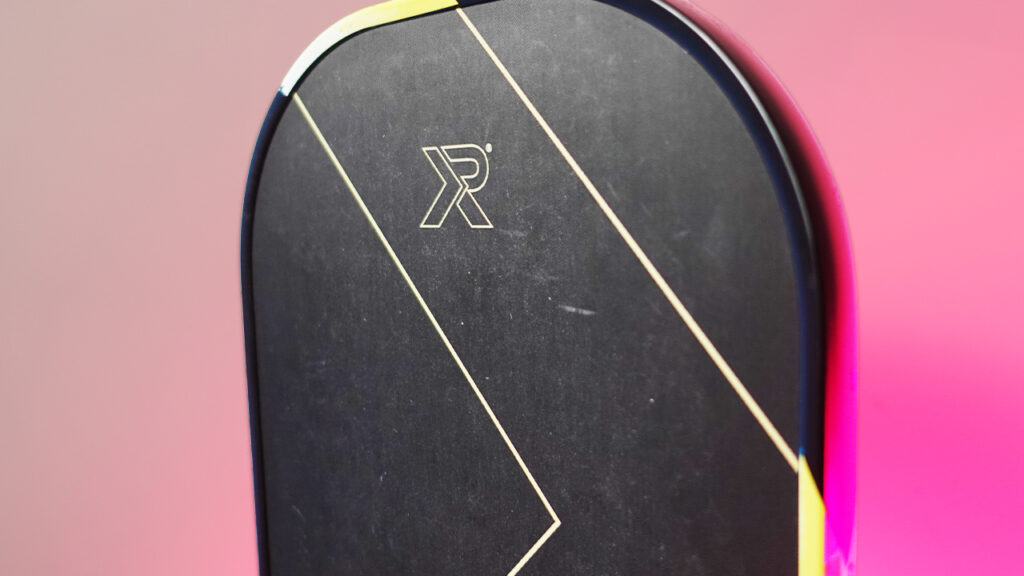
There are players that are looking for that one “forever” paddle that they may double up on and go with until the wheels fall off. There are also a lot of curious pickleball players out there looking to curate a collection of paddle options for situational use. The ProXR Signature Jolt will likely attract more of the latter not only due to durability concerns, but for positive reasons as well.
It possesses out of the box spin potential, and those patient enough to grow with it may find the benefits of its power potential. 70% of the way through testing, I didn’t have the ProXR Signature Jolt as a paddle I would go back to after testing. Now that testing is done, it is at least in mid-to-far peripheral sight.
Disclosure
ProXR had no involvement in this review, didn’t receive an advance look at it, and has not attempted to influence it.