Nike’s Structure stability line was feared to be forgotten by the Swoosh, but the Nike Structure 26 delivers an update 18 months or so after the Structure 25. Did Nike update the line enough to matter in a running shoe world that is increasingly eschewing stability shoes?
Nike Structure 26
Release Date: July 3, 2025
Price: $145
Men’s Weight: 11.3 oz. / 320 g
Women’s Weight: 9.2 oz. / 260 g
Drop: 10 mm (38 mm heel, 28 mm forefoot)
Sizing: True-to-size
Rundown: The Nike Structure 26 is a fantastic-looking, stability-focused daily running shoe that provides unobtrusive support and a smooth ride.
Pros
- Unobtrusive but helpful stability system
- Comfortable and great-looking upper
- Lacing system and integrated midfoot bands deliver superior midfoot lockdown
- Approachable price point without a Swoosh tax
Cons
- Firmer underfoot feel
- Below-average outsole durability (forefoot)
- Puffy, bulky tongue
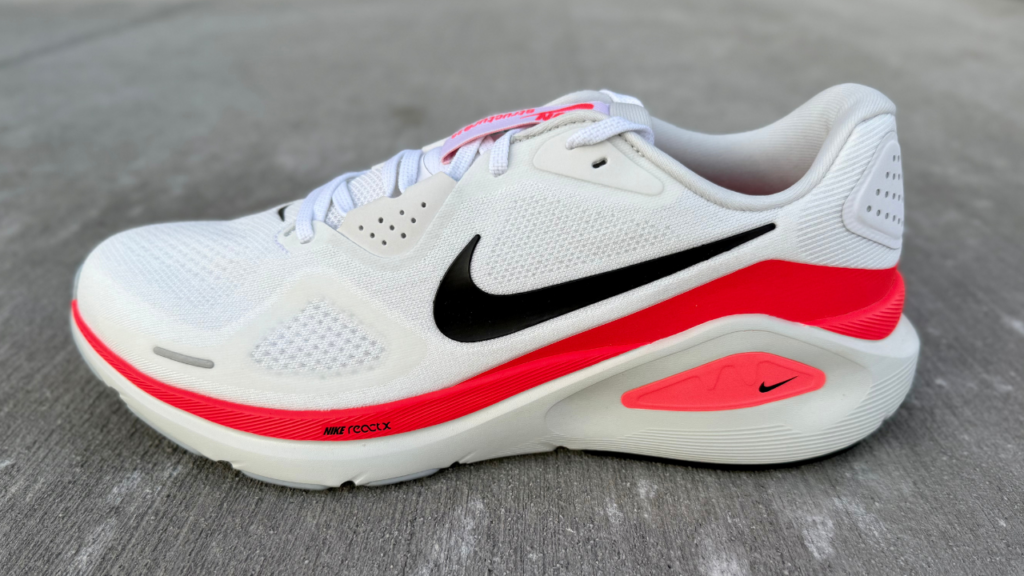
What is the Nike Structure 26?
Nike says, “[t]he Nike Structure 26 is the go-to choice for runners who seek stability and cushioning, whether they’re heading out for a long run, logging routine training miles or looking for an everyday running silhouette.”
That’s a fair description though maybe a bit presumptuous to define it as the “go-to choice” for stability when the market is rife with options—including some particularly great ones on our Best Stability Running Shoes list. Let’s find out if the Structure 26 has what it takes to be one of the better stability shoes on the market.
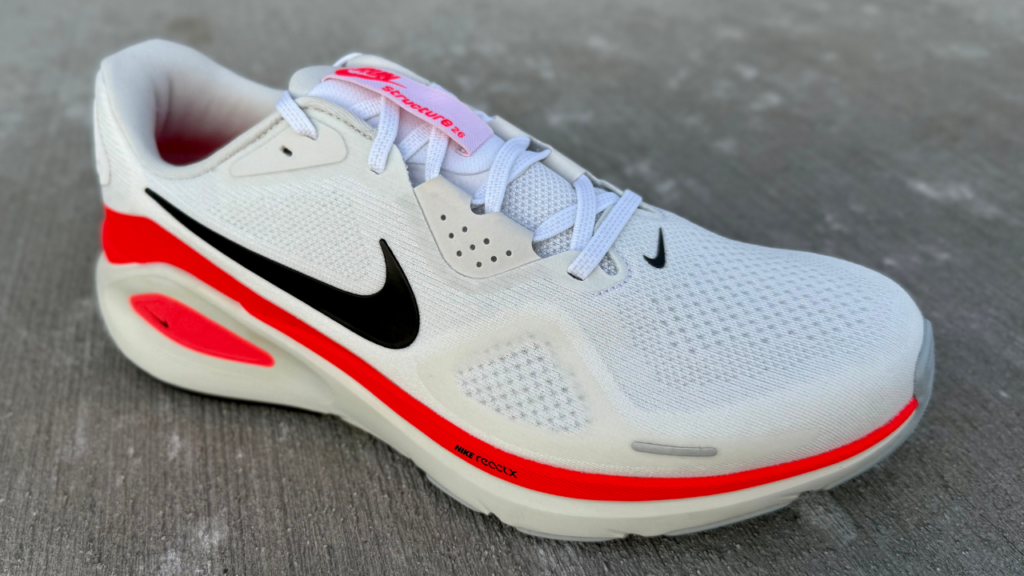
Cushion
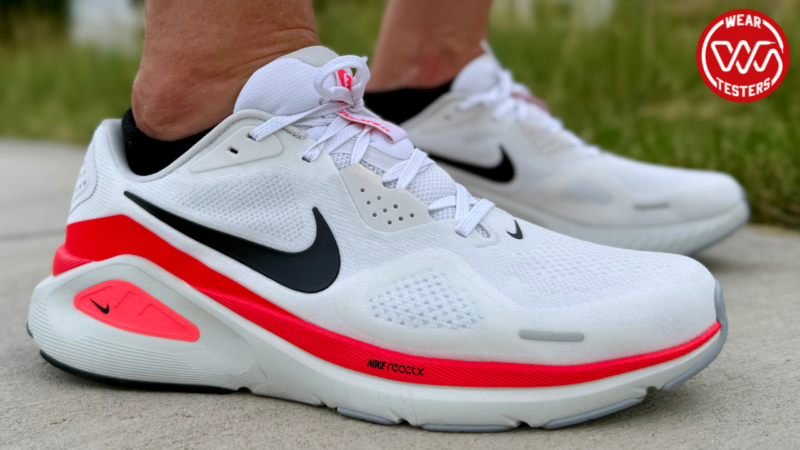
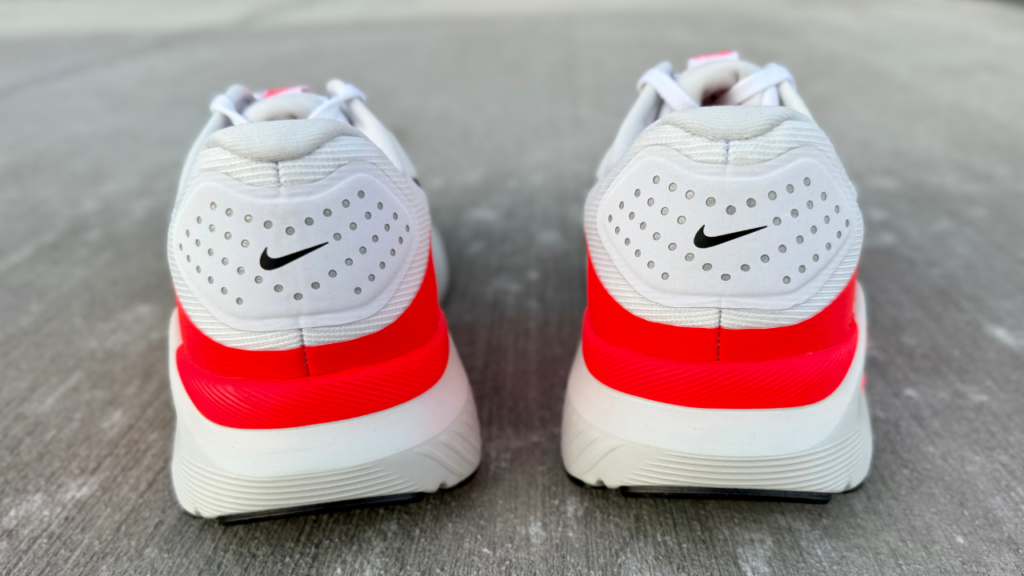
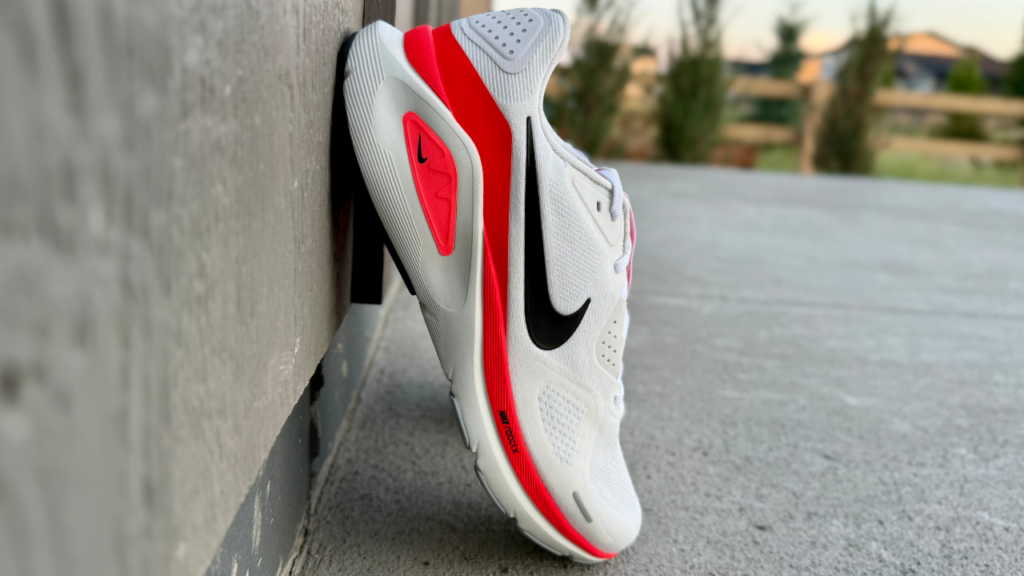
The Nike Structure 26 utilizes a full-length ReactX foam midsole that’s on the firmer side, especially in the heel. It feels less compliant than, but similarly rubbery to, the Nike InfinityRN 4—the last full-length ReactX Nike Running midsole.
The heel feels firmer due to the lateral support pillar at mid-heel. I typically land slightly ahead of that spot (or on it as I get tired). Those who land more centered on the heel or at the midfoot will likely take more advantage of the ReactX’s cushioning.
The transition from heel, to midfoot, to toe-off is smooth and highlights a well-thought-out geometry. It pays dividends in underfoot comfort. While the cushion is on the firmer side, it provides impact protection for those who don’t want too much softness underfoot.
And because it’s firmer, it’s highly responsive. This allows the Structure 26 to not only handle daily training runs well but also be game for the occasional uptempo burst.
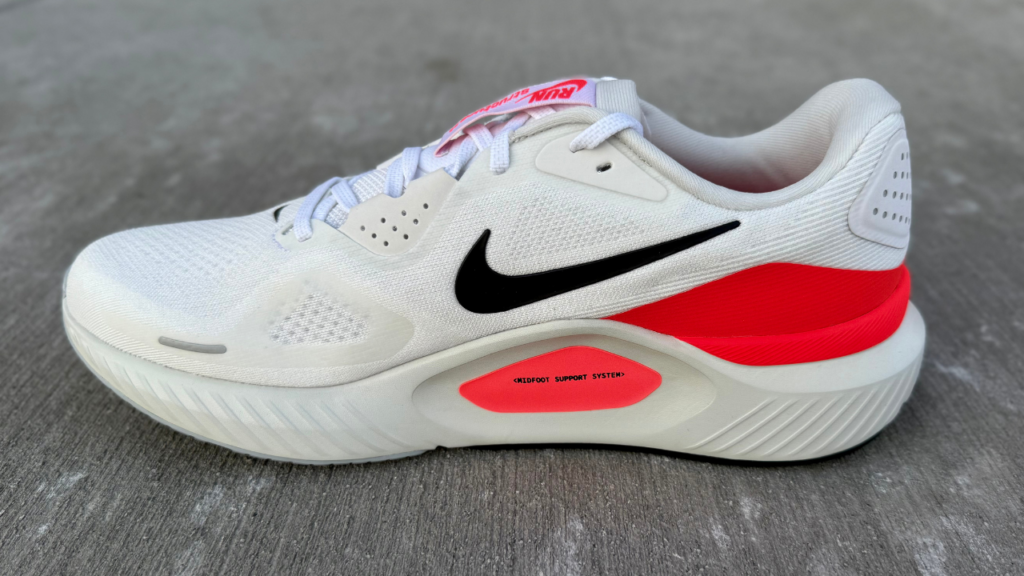
Support
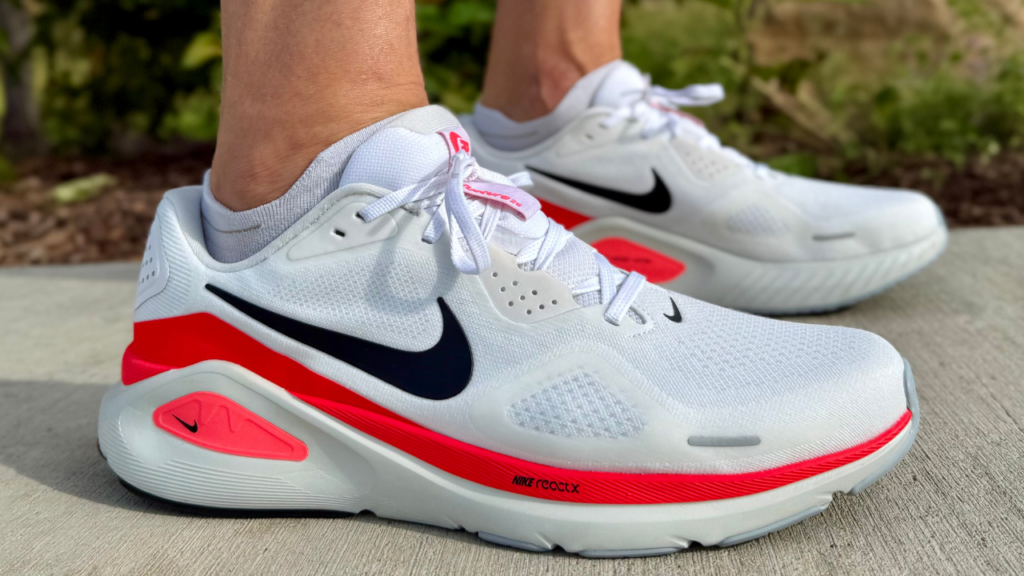
The Nike Structure 26’s Midfoot Support System, triangles of dense foam at the medial midfoot and lateral heel, plus a similarly dense heel clip all work together to provide fairly unobtrusive support. The setup guides the foot to avoid excessive eversion or inversion yet doesn’t force the foot into an unnatural gait pattern. That the guidance isn’t overbearing is a big factor in why the Structure 26 has a smooth ride (never a given in a stability shoe).
The one thing that may give some stability runners pause is the 10 mm drop. It’s high, especially for a shoe this firm, and may shift impact forces from the ankles/Achilles to the knees or hips. Personally I’d prefer a shoe like this to have a 6 mm to 8 mm drop so it could be a bit more democratic, but there are lots of runners with Achilles issues that may absolutely love that extra bit of drop from heel to toe.
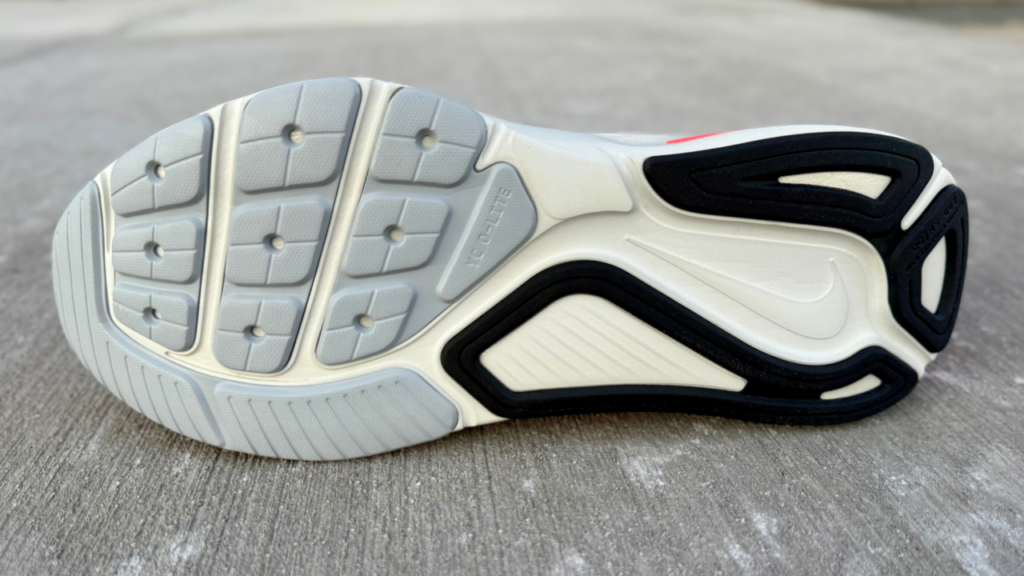
Traction
The Nike Structure 26’s outsole uses high-abrasion rubber in the heel and blown rubber in the forefoot. If you’ve read our reviews long enough, you know we’re not fans of blown rubber. It’s softer and contributes to underfoot comfort, but its durability is subpar.
The blown rubber in the Structure 26 shows too much wear too fast. The entire forefoot is covered with it (sans the helpful flex grooves); so no matter where you push off, you’re going to burn through the forefoot much faster than the almost indestructible rubber at the heel. Because of this, I expect the Structure 26’s outsole to have below-average durability.
Upper
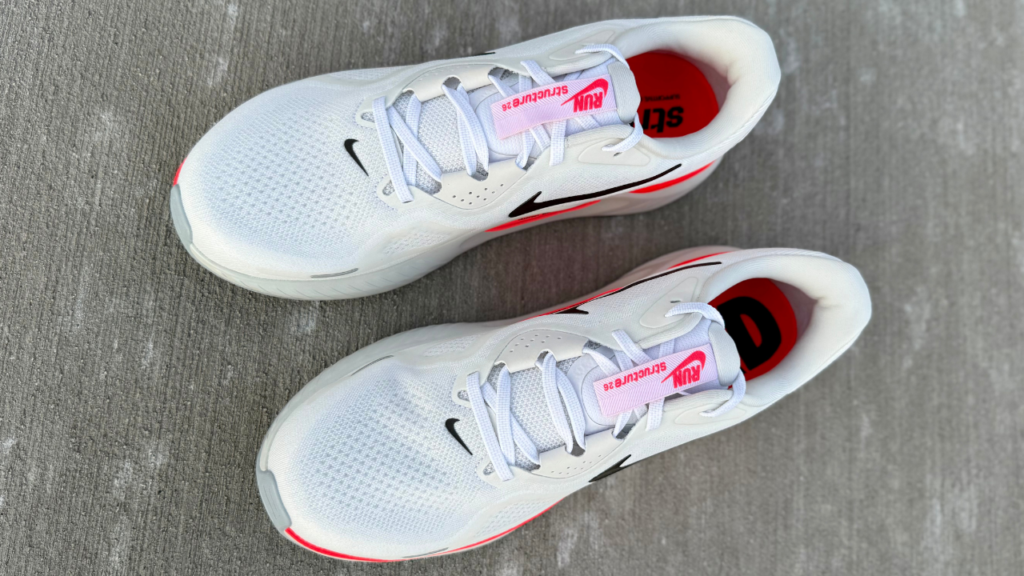
The engineered mesh upper on the Nike Structure 26 fits true-to-size lengthwise, is comfortable, has average breathability, and a comfortable ankle collar. The tongue is too bulky and puffy up top and could stand to be slimmed down quite a bit.
The lacing system has great midfoot lockdown thanks to midfoot bands that extend from the second and third lace loops to the strobel board beneath the foot. It’s a nice midfoot hug that enhances the fit and function of the Structure 26.
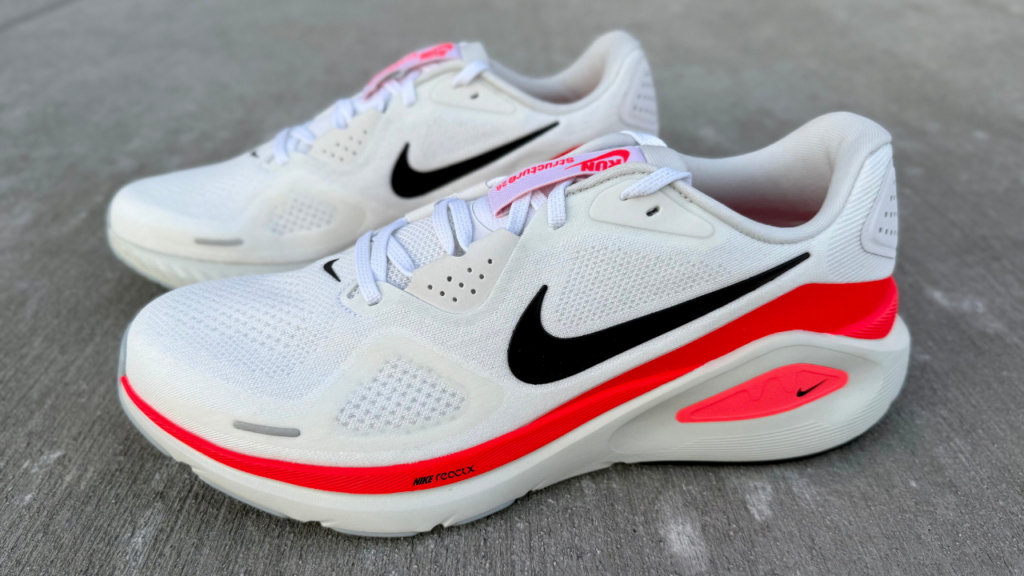
Also, I’d be remiss without mentioning how many compliments I got on the aesthetics of the Nike Structure 26. And from high-schoolers too! And you know they aren’t complimenting a 40-something’s choice in footwear unless they really, really like it. This is objectively a good-looking shoe—something stability shoe wearers won’t ever take for granted because it wasn’t long ago that stability shoe aesthetics seemed to be something shoe companies didn’t care about at all.
Is the Nike Structure 26 wide foot friendly?
The Nike Structure 26 is, like many Nike running shoes, not wide-foot friendly. There’s a touch of extra room in the forefoot but not enough to make wide-footers happy. However, there’s already a women’s extra wide version available on Nike’s web store, and the men’s extra wide version should be coming to the Nike store soon.
Is the Nike Structure 26 worth $145?
Yes, $145 is a respectable price point for a solid, stability-focused daily trainer. The outsole durability is a concern, but I think most people will get their money’s worth in usage.
How to use the Nike Structure 26
The Nike Structure 26 is best used as a daily trainer for easy and recovery runs for those who need extra stability in their running shoes. The Structure 26 does have the ability to occasionally pick up speed and can likely handle medium-long runs (depending on the runner’s size/build).
Nike Structure 26 Summary
The Nike Structure 26 shows Nike still cares about creating a solid stability shoe for runners who need the extra support. It looks fantastic, provides unobtrusive support, and offers a smooth ride. And though it has a few subpar characteristics, on the balance it’s an above-average stability running shoe option for Nike fans.
How does the Author Run?
Drew Whitcomb (age 43, 6’6″ 200lbs): Runs daily with a once a week rest day. Runs a lot of miles due to testing needs and a growing affinity for long-distance races. Regularly competes in marathons, half-marathons, 10k, and 5k races.
Disclosure
While Nike did provide a pair of the Structure 26 to facilitate this review, the company had no involvement in this review, didn’t receive an advance look at it, and has not attempted to influence it.