Once upon a time, we didn’t have many options for those of us who overpronate (i.e., those of us whose feet naturally roll excessively inward). Then when we did get more “stability” shoes, it often felt like these options were heavier, slower, and honestly just not fun in comparison to their neutral counterparts.
Well, in case there’s been any doubt that those days are gone, check out the plethora of glowing stability shoe reviews this year alone at WearTesters—from the Saucony Guide 18 to the Brooks Adrenaline GTS 25 and beyond, it’s a new golden era.
But no running shoe list is complete without a Hoka entry. The company has become one of the fastest growing shoe brands around (even with some recent slowdown) and is a ubiquitous part of everyday life, including their presence on the feet of WWE Superstar CM Punk each week on Netflix’s WWE Monday Night RAW.
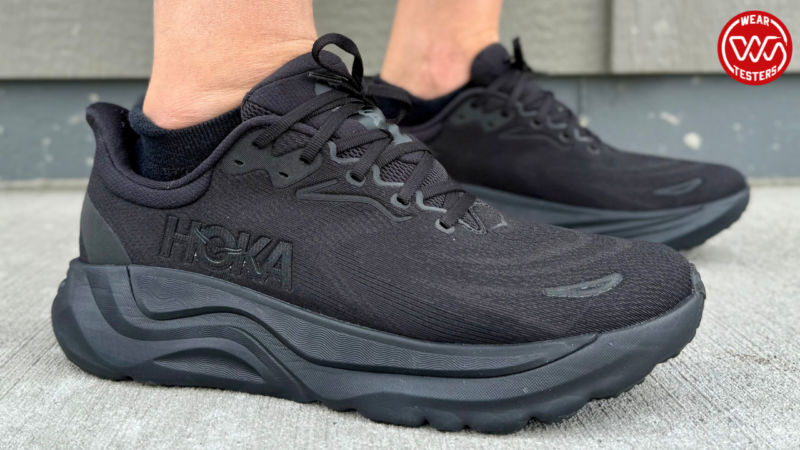
So. Enter the Hoka Arahi 8, the completely redesigned and newest iteration of the flagship high-cushion stability shoe that aims to take a bigger piece of the stability-shoe pie. Does it succeed?
Thanks to Hoka sending pairs to the Fortress of WearTestitude, we’ve got your answers below—so let’s get into it!
Hoka Arahi 8
Release Date: July 1, 2025
Price: $150
Men’s Weight: 9.8 oz. / 278 g
Women’s Weight: 7.7 oz. / 218 g
Drop: Drop: 8mm (39mm heel, 31mm forefoot)
Sizing: True-to-size
- Rundown: The Hoka Arahi 8 offers a stable, balanced ride that’s inviting for runners of all experience levels.
Pros
- An inviting ride for runners of all experience levels
- Surprisingly stable for the cushioning experience
- This shoe will last you a whole lotta miles
Cons
- Standard fit is not wide-foot friendly
- Every HOKA daily trainer is starting to look the same
- Not especially dynamic
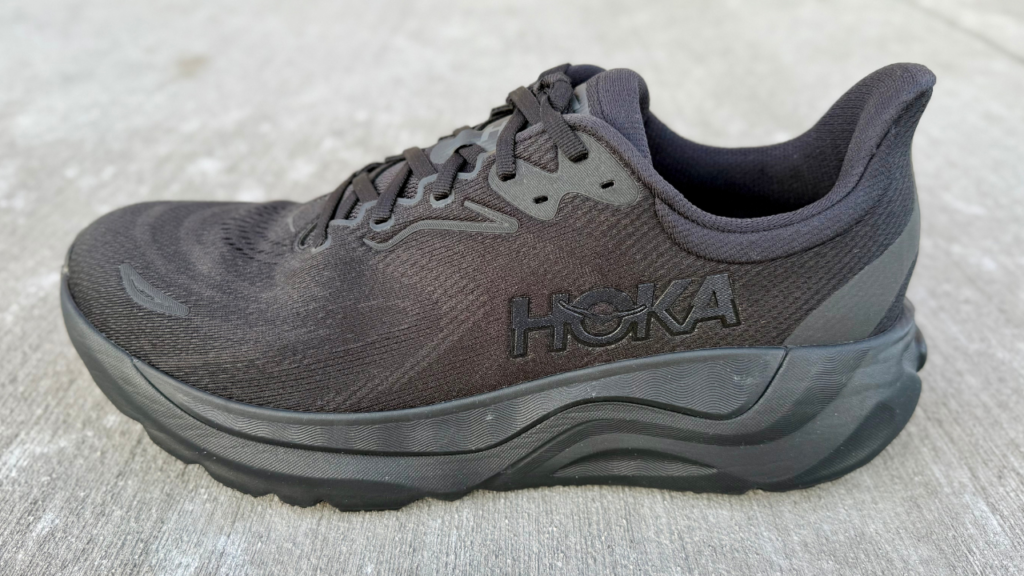
What is the Hoka Arahi 8?
According to Hoka:
“A surprisingly sleek stability shoe.“
“Anything but your average stability shoe, the Arahi 8 maintains a secure ride while using softer materials than its predecessor. The secret lies in our enhanced H-frame technology. A stabilizing system that combats overpronation while providing a smooth entry into the gait cycle, we’ve paired our intuitive H-frame with a sleek jacquard upper and low-profile tooling to deliver a streamlined stability shoe with unprecedented cushioning.”
We swear it’s not average! Doth the marketer protest too much? Or is that assessment correct? Let’s find out.
Cushion
I’ve been running in Hoka shoes since the 2016 Infinite, which looked more like a clown shoe than an elite running shoe. [Editor’s Note: Here is 2016-era Connor from Running Warehouse telling you all about it…]
Funnily enough, that shoe is what began a true appreciation for running and got me moving in ways I never had before. The cushioning and ride were unlike anything I’d ever experienced to that point.
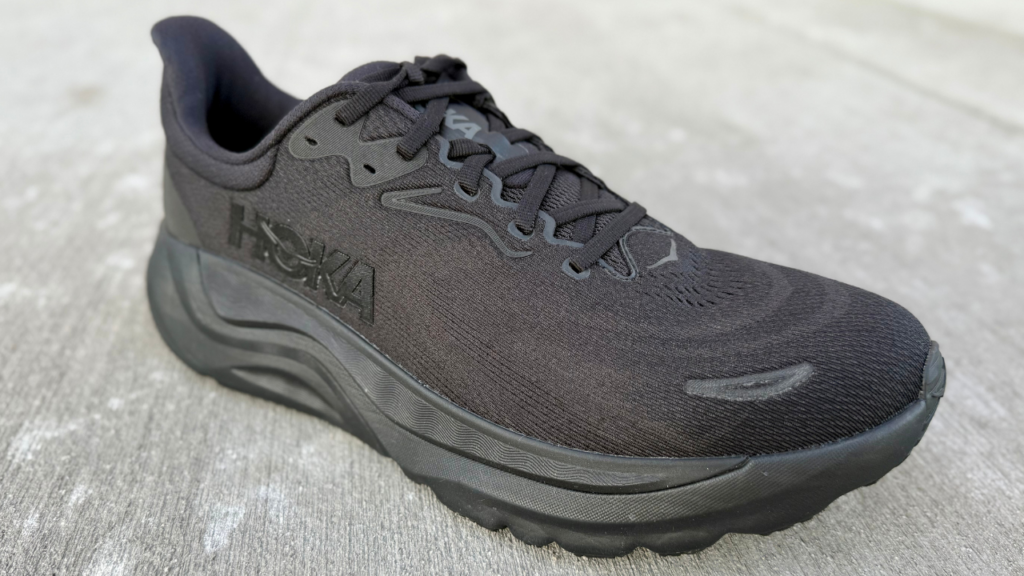
Fast forward to 2025 and to a mixed relationship with Hoka models, as I now find the ride and shape of the shoes often at odds with my natural running movement. But one thing that can’t be denied is that the company’s dual-density EVA foam is consistently comfortable. Paired with the MetaRocker, it’s no surprise that Hoka is one of the first choices for new runners (and many longtime athletes too).
I found the ride to be enjoyable but unremarkable. Each stride felt smooth and my feet perfectly cushioned, but I consistently wanted more energy return from the foam. The steady ride is appreciated on days where I don’t have the energy to pick up the pace; but at times it felt like my feet were sinking into the midsole instead of being propelled forward.
So I didn’t hate the ride, but I didn’t love it either. The Hoka Arahi 8’s cushion was just kind of in the middle for me.
Support
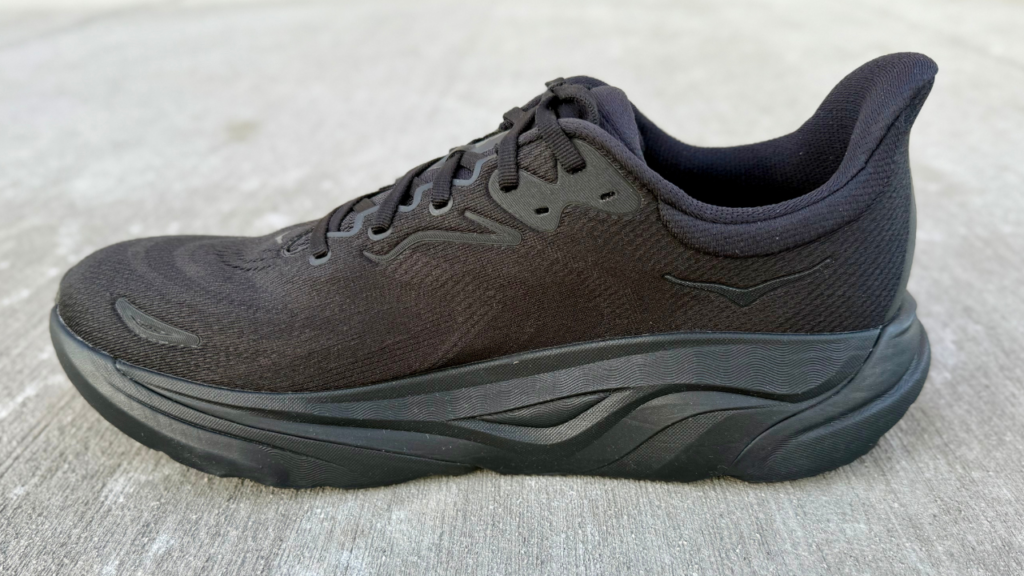
One of my main challenges with Hoka shoes is that everything feels unstable for me— partly due to my own overpronation—and the Arahi 8 absolutely addresses that issue.
Perhaps it’s the “enhanced H-Frame” (a change from the old J-Frame in the Arahi 7) that makes the difference. Certainly it makes sense when you consider that the letters refer to the shape of the denser portion of midsole foam underfoot and how that might provide more balanced stability.
[Editor’s Note: Hoka describes the use of the more substantial H-Frame—a different version of which first appeared in the Gaviota 5—as a means to allow both softer cushioning and increased stability here in the Arahi 8.]The result is a balanced ride that keeps you moving in a consistent, stable manner with enough support for even 200lb+ runners like me.
Traction
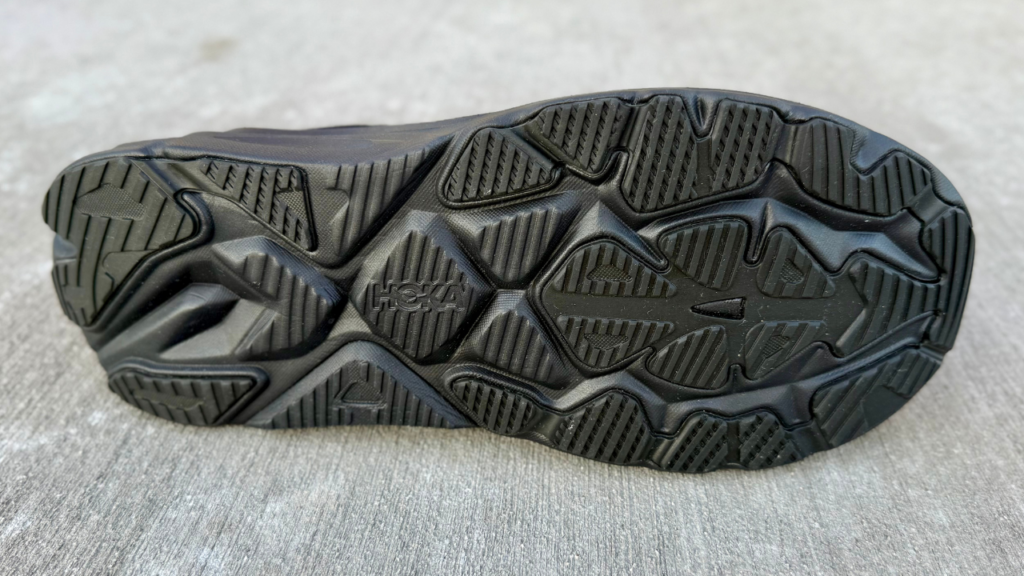
Los Angeles weather strikes again and doesn’t really allow for a variety of weather conditions in which to test shoes, but the super abrasion rubber outsole looks built to take a whole lot of miles before it wears out.
I did take the Hoka Arahi 8 out on hot cement, gravel, and some uneven grassy surfaces where I never thought twice about traction—so that seems like a win.
Upper
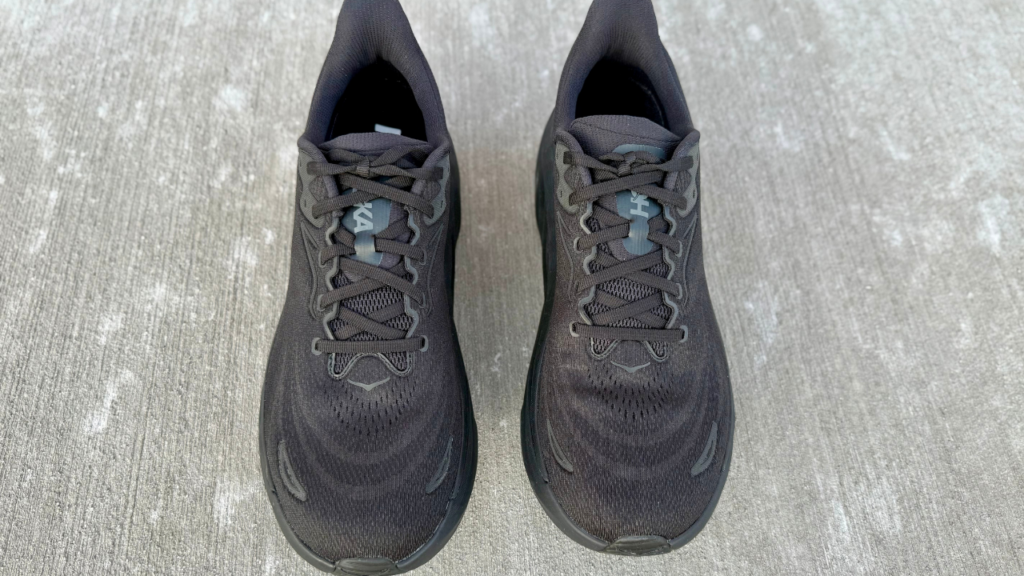
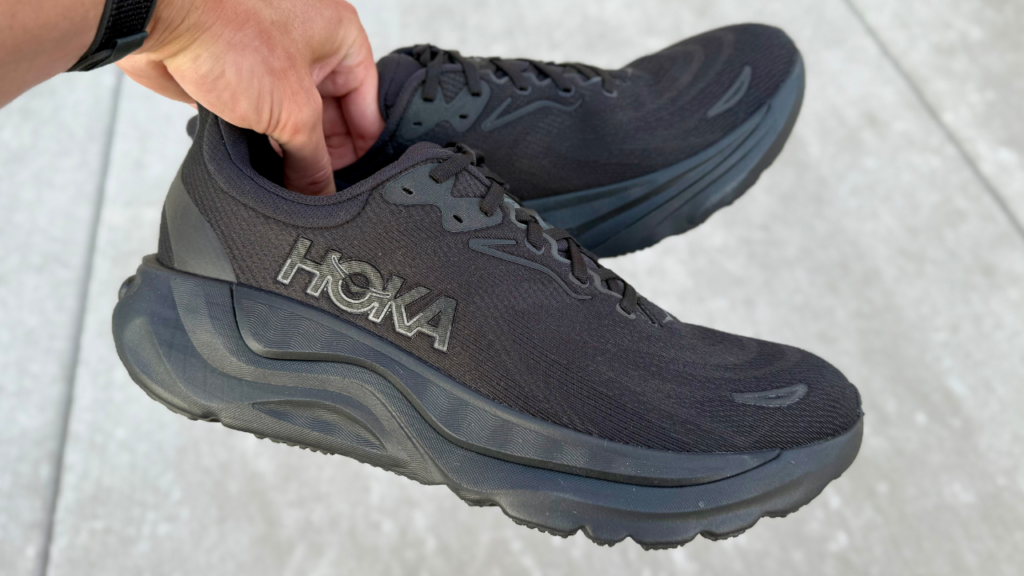
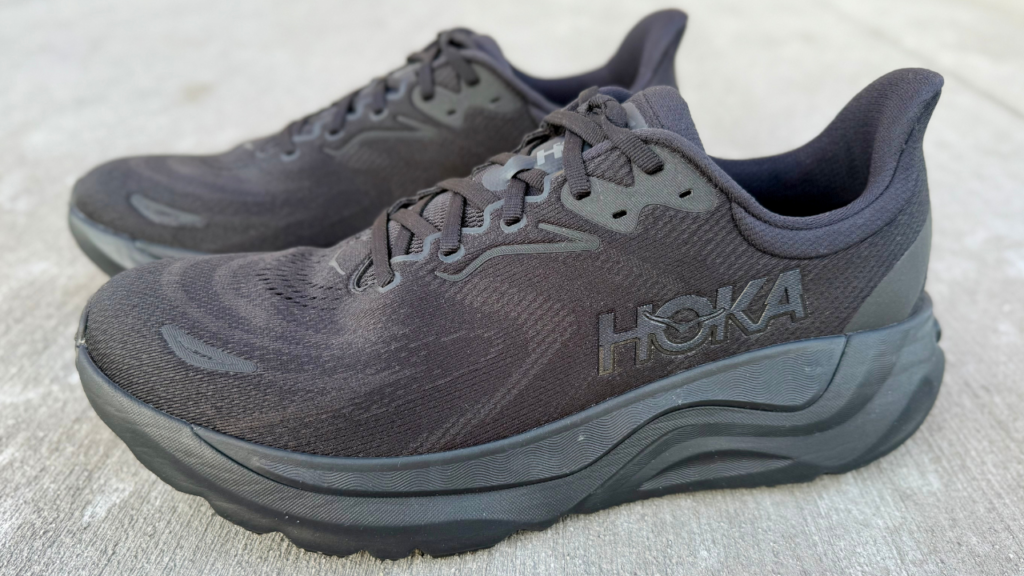
If I hadn’t looked at the shoebox, I wouldn’t have immediately known which Hoka shoe I was holding in my hands because they all look the same at this point. That might be a benefit to those who love the brand’s aesthetic (and more power to you!), but I’d be lying if I said I wouldn’t love more variety in the colorways and styling on Hoka shoes.
The Arahi does look much sleeker than I remember from past models, and that is a welcome change I’ve seen across Hoka’s entire line in recent years. I still find it hard to think of any of their shoes as chunky given my initial exposure to the Infinite all those years back, but the changes here are noticeable and make the shoe look more dynamic.
Looks aside, the double jacquard mesh is incredibly comfortable on foot and hugs (instead of squishes) your forefoot, a welcome change from how narrow some Hoka shoes fit. Unfortunately though, I experienced a lot of medial pressure—which is unusual for me with most other daily trainers but is a staple of Hoka shoes. The foot shape tends to be too narrow for my midfoot.
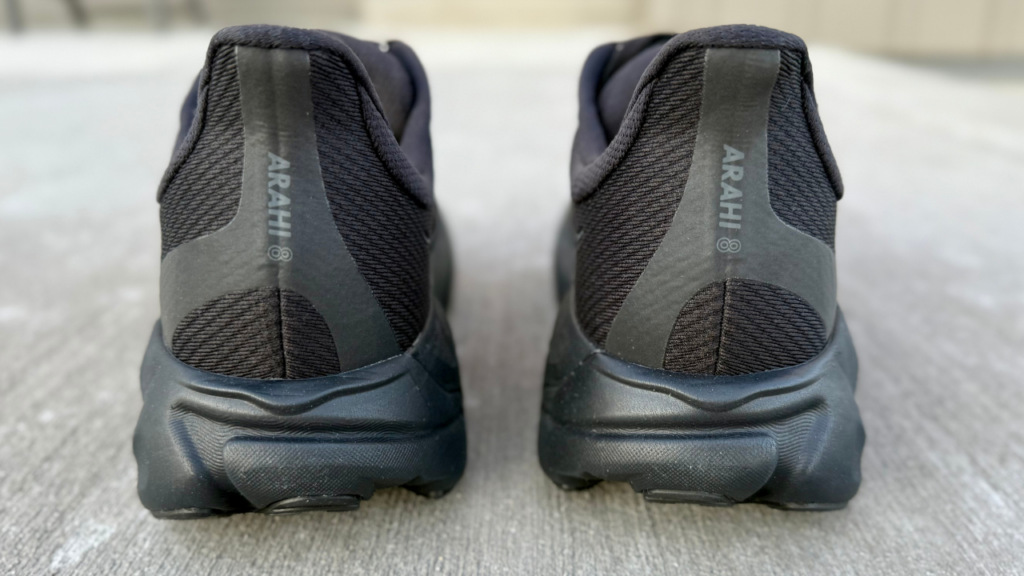
The Hoka Arahi 8 overall felt too snug after passing six miles and dealing with the resultant foot swelling of this summer heat. There are wide and x-wide options available, however. So chances are I’d clear up those issues with one of those additional widths.
Is the Hoka Arahi 8 wide foot friendly?
Yes, because there are two wide versions available as noted above.
I’d recommend anyone with a slightly wider forefoot—AKA me—opt for the wide version as a starting point. Same goes for those who need a bit of space at the medial midfoot.
Is the Hoka Arahi 8 worth $150?
Absolutely.
The Hoka Arahi 8 is the kind of shoe that will be the “one shoe to do it all” for many runners and will last a ton of miles at a price below the median ($160) for daily trainers.
How to use the Hoka Arahi 8
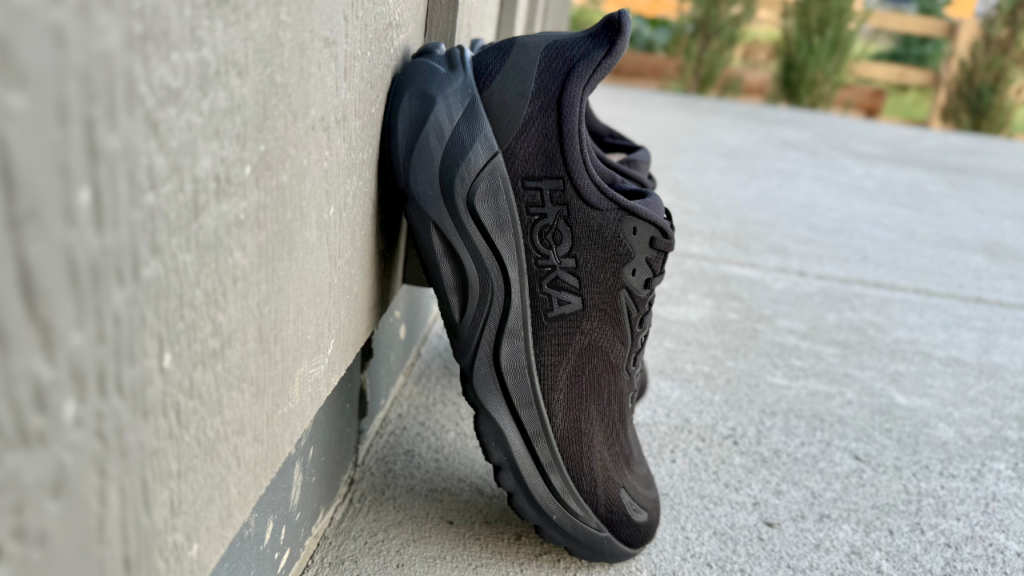
The Hoka Arahi 8 is a stability-focused daily trainer that is best used for soaking up everyday miles and adding more support for those who need it.
Hoka Arahi 8 Summary
Hoka redesigned its signature stability shoe, and the result is that the Hoka Arahi 8 is an incredibly successful high-cushion daily trainer, even if the ride is at times unspectacular.
How does the Author Run?
Arune Singh (age 43, 5’11”, 210lbs): Trains daily with functional fitness programming from Deadboys Fitness, founded by Colby “Seth Rollins” Lopez and Josh Gallegos, along with logging 30-40 miles of running per week. He also has a medical history of Sleep Apnea and Myasthenia Gravis, meaning Arune’s focus is on lean muscle mass.
Disclosure
While Hoka did provide pairs of the Hoka Arahi 8 to facilitate this review, the company had no involvement in this review, didn’t receive an advance look at it, and has not attempted to influence it.