
In recent years, the best marathon running shoes have undergone an incredible transformation. Starting with Nike Vaporfly 4%, the entire running shoe industry changed what constituted a proper marathon shoe. And now, the best marathon running shoes are better than ever, and recent world record runs attest to that fact.
The best marathon running shoes used to be low stack height and as light as possible. The thinking was to minimize the weight the runner carried on his or her feet for such a long distance in order to save energy. But due to the emergence of super foams like Pebax, all of sudden, a super-light shoe with a big honking stack of foam was an option. These super foams were incredibly plush and unstable, so brands placed carbon fiber plates inside the foam to offer greater stability and springiness. What resulted were shoes that better protected joints that aid in quicker recovery from long grueling races. Oh, and studies claimed they improved performance by up to 4%.
With all that good press, the new super shoes became the most coveted marathon running shoes, and soon every brand was making one. Now, there’s enough that we can do an entire list dedicated to the best marathon running shoes. Our list below will explain some of the nuances of these shoes and help your figure out which will be best for your feet.
If you wish to see all of our running shoe reviews, you can check out our Running Shoe reviews page.
Categories are placed to help you find what you want. If you know what you need, you can simply click the category. If not, feel free to check out the whole list as your guide.
We would also like to hear your thoughts on this list, and you can even share your own list in the comments below.
Let’s get into our picks:
Best Marathon Running Shoes for Racing: Tier 1
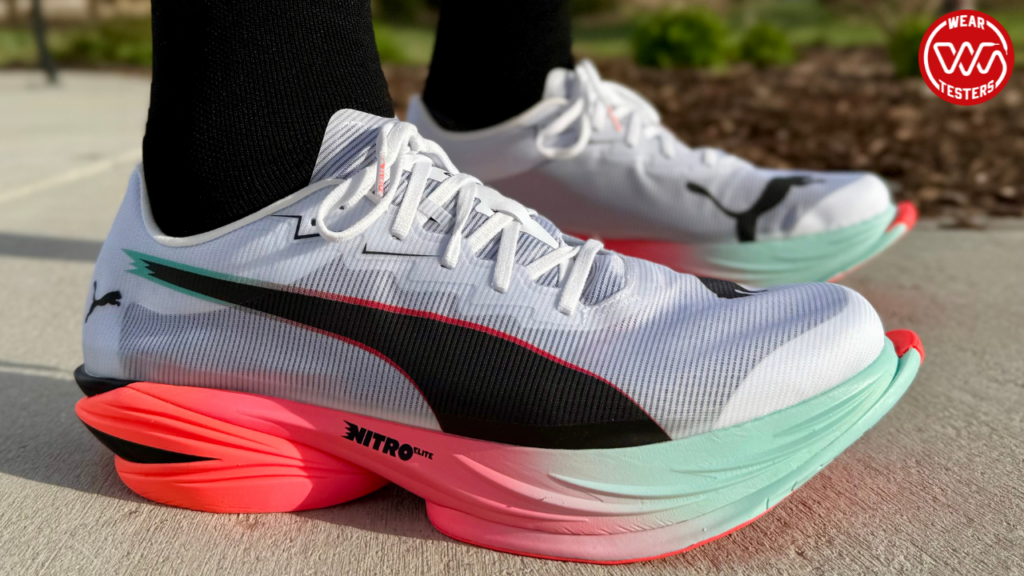
Puma Fast-R 3
The Puma Fast-R NITRO Elite 3 is a leap forward for Puma’s marathon racing shoes, and an independent study shows it provides an astonishing 3.15% improvement in running economy. Those legitimate study results that back up its marketing claims, a midsole with a smooth rocker and elite bounce, a minimal but comfortable upper, and the potential to work well for various footstrikes (despite its midsole cutouts) are among the Fast-R 3’s impressive and numerous Pros.
Its Cons include an annoying, paper-thin, foldy tongue that is difficult to set in place (though it then stays put on the run), questionable outsole durability that’s uncharacteristic of typical Puma shoes (though the incredible grip remains), and a high price point. Length is true-to-size, but we’d caution that wide-footers should definitely try on the Fast-R 3 in-store (or purchase from somewhere with a good return policy) due to the definitively snug fit throughout.
The efficiency the Fast-R 3 offers is undeniable, and it’s best used for road races from the 5K to the marathon along with the workouts – like intervals, tempo, and threshold runs – that come with training for those races. It may not be the road racing shoe for everyone, but the Fast-R 3 sits firmly in the top tier of racing shoes and should be in the consideration set of any runner who’s looking for every little edge to climb the mountain to their next PR. For more details, read the full review.
Fit: True to size, Drop: 8mm, Price $300
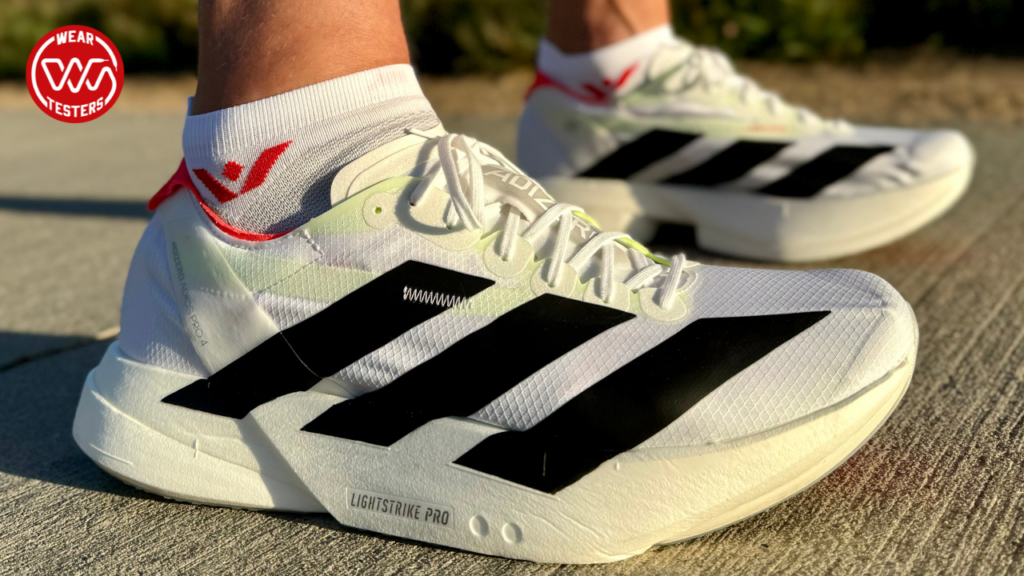
adidas Adizero Adios Pro 4
The adidas Adios Pro 4 is the most comfortable and lightest Adios Pro model to date. It won’t have enough impact protection for all runners and isn’t a good shoe for wide footers, but it ratchets up the squish and snappiness of the Adios Pro line to a new level.
Pro athletes wearing adidas shoes like the Adios Pro 3 and Evo 1 are already setting records. I suspect that will continue with the Adios Pro 4. The adidas product team created a shoe that feels fast as soon as you hold it in hand and feels even faster once it’s on foot. It delivers the majority of the Evo 1’s innovations to the table at half the price. Because of that, we’re going to see a lot of runners running very fast in the adidas Adios Pro 4. Read the full review.
Fit: Typical adidas, Drop: 6mm, Price $250
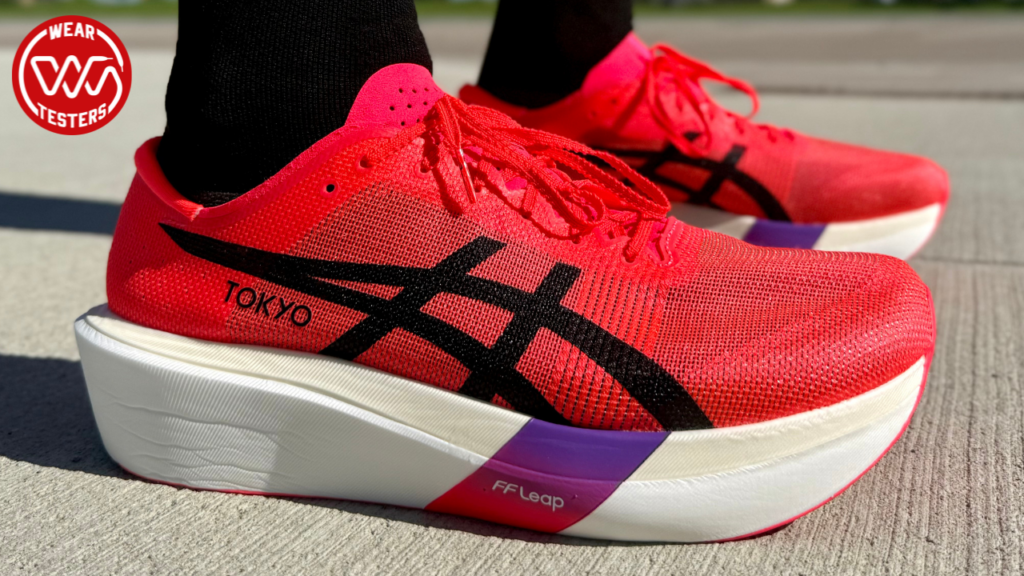
Asics Metaspeed Sky/Edge Tokyo
The Asics Metaspeed Sky and Edge Tokyo, which continue Asics’ pattern of obfuscating the true nature of their top-tier road racers, delivers what is easily the brand’s best racing shoe yet by perfectly balancing soft, bouncy, and stable cushioning.
The Edge is aimed squarely at the cadence runners, or midfoot/heel strikers, with the FF Leap and FF Turbo+ foams distributed to provide maximum plushness up front and maximum stability in the rear. The Sky is aimed at forefoot strikers with the cushion and plate changed around to optimize for that movement pattern.
While the featherweight Motion Wrap 3.0 upper is extremely breathable and offers great lockdown for quick cornering, Asics annoyingly brought back the same subpar, foldy synthetic suede tongue that saves weight but fails to relieve lace pressure. Ultimately, despite that vexing tongue, the Metaspeed Sky and Edge Tokyo are go-to race day options, providing excellent stability and traction with ASICSGRIP, and offering proper value at the $270 price point for any road race distance from the mile up to the marathon.
Read the Metaspeed Sky Tokyo review
Read the Metaspeed Edge Tokyo review
Fits: True to Size, Drop: 5mm, Price: $270
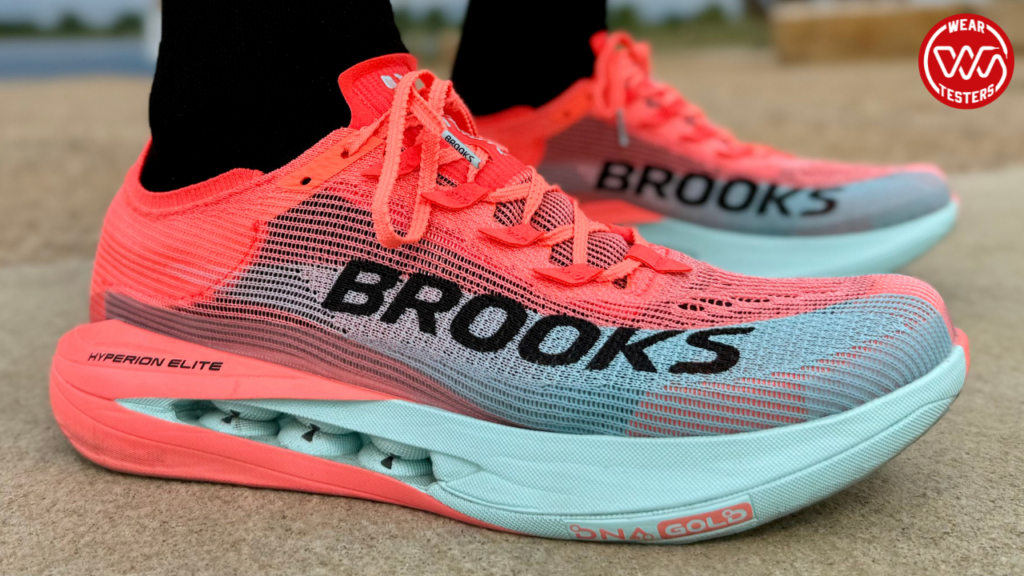
Brooks Hyperion Elite 5
The Brooks Hyperion Elite 5 is the best Brooks race shoe to date and competes well with all other top-tier marathon racing shoes, finally showing runners that Brooks cares just as much about race day as the everyday.
It boasts an impressive list of Pros: elite bounce from the (100% PEBA) DNA GOLD midsole; plush impact protection on landings; a highly breathable TPU pressed upper; a lightweight, barely-there feel; and a grippy, durable outsole. The Cons were not universally experienced but should be noted: some testers found the low-profile heel can cause lockdown issues requiring a runner’s knot; and the shoe is not wide-foot friendly due to its slim fit through the forefoot and heel. It’s worth mentioning, however, that the Brooks Hyperion Elite 5 is a unisex, D-width shoe—meaning those who usually wear B-width shoes (the standard in women’s sizing) may not experience the fit in quite the same way. It will be best to try it on to determine if the fit is accommodating enough for your needs (especially for contending with the foot swell common in long-distance racing). The length is true-to-size.
While the Hyperion Elite 5’s $275 price hurts our soul, that is the way pricing is trending (and higher) for flagship marathon racing models. And the shoe does deliver as one of the best of the best. The Brooks Hyperion Elite 5 is best used for long-distance road racing from the 5K to marathon distances and all the interval, tempo, and long-run workouts needed along the way to prepare to perform your best at all those distances. It’s a total package where the upper, traction, and cushion all work together to help you feel fast. For more details, read the full review.
Fits: True to Size, Drop: 8mm, Price: $275
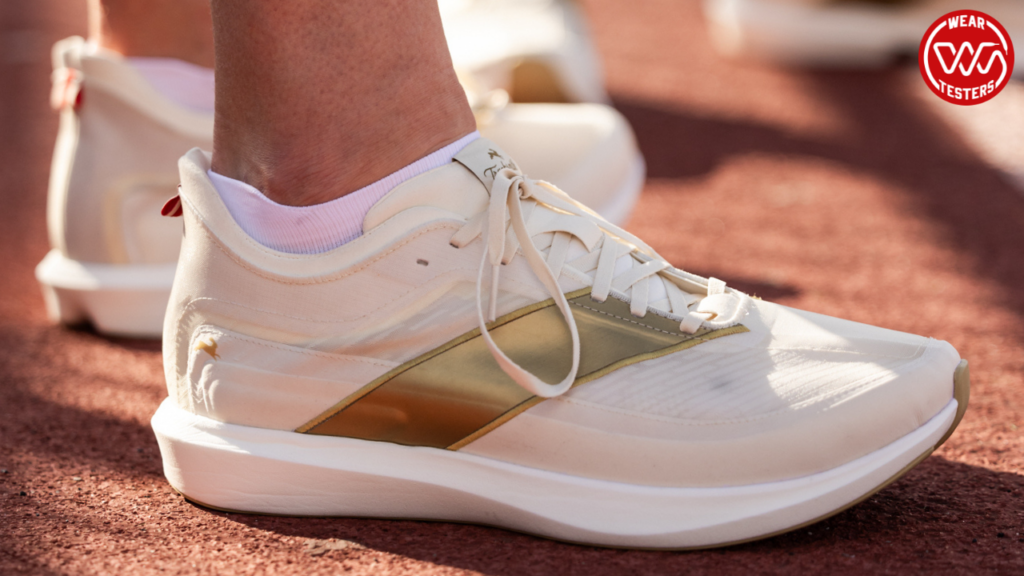
Tracksmith Eliot Racer
The Tracksmith Eliot Racer is a top-tier road racing shoe that’s different from any racing shoe you’ve used before. The drop-in midsole setup works well and is unique in road running (though drop-in midsoles are familiar to our WearTesters audience due to their occasional presence in basketball performance footwear). The carrier foam is Pebax, and the removable ATPU drop-in sits atop a scooped carbon fiber plate. The result is a bouncy, responsive, and protective race day shoe in which the lack of glue (thanks to the drop-in setup) really allows the energy return to shine for runners of all sizes. The Eliot Racer feels smoother and better the higher the effort.
The outsole has more rubber than expected, which indicates Tracksmith may be prioritizing durability. As for grip, the traction was a mixed bag that resembled most racing shoes: good but not the best in awful weather. But thanks to the drop-in midsole’s sidewalls, the broad forefoot, a tightly gusseted tongue, and the Tracksmith sash that locks down the midfoot, the Eliot Racer is on the upper end of the spectrum in terms of racing shoe stability. The upper’s mesh doesn’t retain water, and the microsuede tongue and liner add comfort. Heel lockdown might need some fine-tuning via either simple tightening of the top laces or a runner’s knot, but it is achievable. The Eliot Racer’s wider-than-usual-forefoot, straighter last, and taller toebox allow for more wiggle room and toe splay compared to many race-day options, making it possible for wide-footers to enjoy what it has to offer.
That said, the price is certainly at the higher end of the price continuum of distance race models. So if you’re price conscious, the Tracksmith Eliot Racer might not be the right road racing shoe for you. But if you can swing it and want bounce, support, understated and high-end looks, plus Tracksmith’s reputation for durability, the Eliot Racer will be worth the money. Read the full review.
Fit: True to Size, Drop: 7.5mm, Price: $280
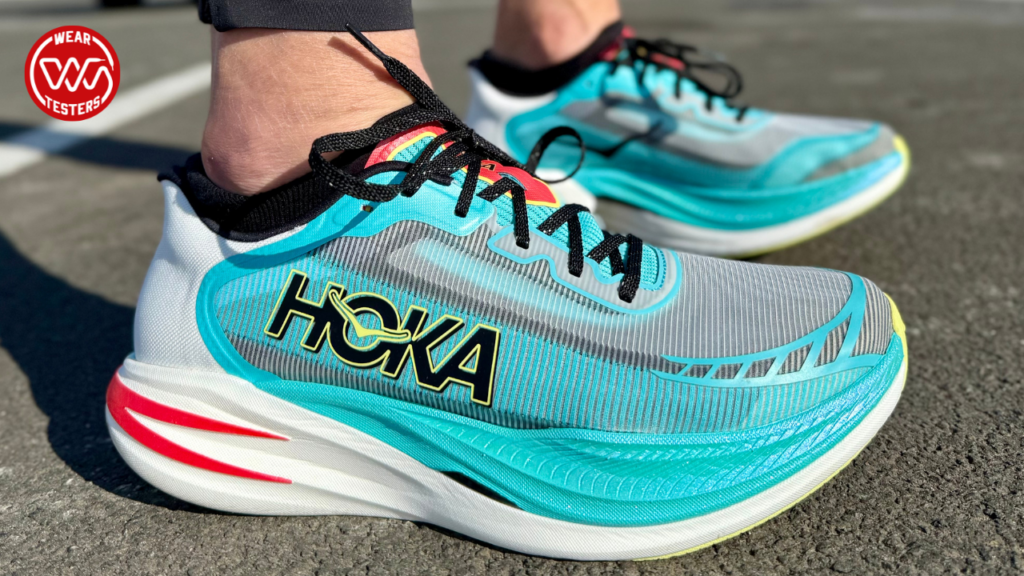
Hoka Cielo X1 2.0
The Hoka Cielo X1 2.0 is Hoka’s premier road racing super shoe with a dual-layer, PEBA midsole bisected by a snappy carbon plate. Whether racing anything from a 5K to a marathon, running a tempo or interval session, or doing any other workouts that require picking up speed, the Cielo X1 2.0 is a reliable (and fun) companion. While there are great road racing shoes priced below $275, the Cielo X1 2.0 does deliver on top-tier performance.
Our testers agreed on very clear Pros, namely its protective, incredibly bouncy midsole and efficient rocker, solid stability for a race day shoe, lightweight, breathable, and comfortable upper with excellent lockdown, and its ability to make fast running feel easier. Neither tester found the Cielo X1 2.0’s Cons to be dealbreakers, noting the outsole shows signs of wear quickly, and the upper isn’t particularly stretchy (making it extra important that the fit works for you).
The Cielo X1 2.0 is offered in unisex sizing, so be sure to pay close attention to Hoka’s size conversions if you typically wear women’s sizing. This could be an advantage if you are a small-footer who wears women’s sizing but who also needs extra room in the forefoot. Those who typically wear men’s (or women’s wide) sizing might note a snugger, slightly short racing fit. So while true-to-size will still likely work for most, trying it on will be worthwhile for those on the margins of their typical size. For more details, read the full review.
Fit: True-to-size but slightly short, Drop: 7mm, Price $275
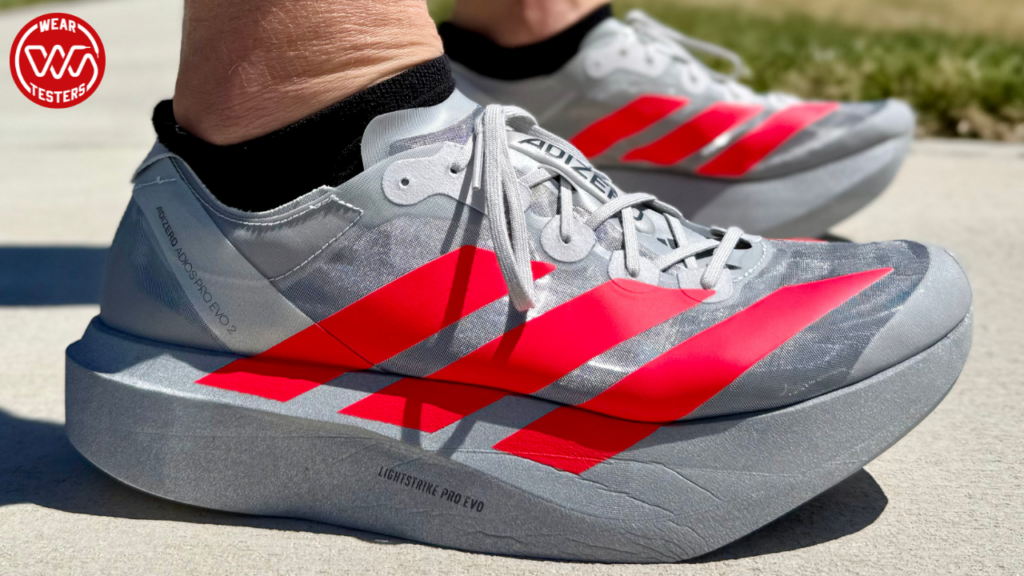
adidas Adios Pro Evo 2
There are a couple of changes compared to the Pro Evo 1; but, barring a few small exceptions, the adidas Adios Pro Evo 2 performs largely the same as the original.
Pros include: the return of its phenomenal rocker geometry; the same great midsole compound for a soft, bouncy, and fast ride; plus a light-as-a-feather weight. Cons are: a lack of wet traction; an unstable heel; a fussy, foldy tongue; and, of course, an incredibly high price. Few people will truly get $500 in value out of the Pro Evo 2. The price is only going to be worth it for a very small group of cash-rich, sub-elite runners who are chasing big goals like Olympic Trials qualifying standards.
As for sizing, the Adios Pro Evo 2 runs true-to-size in length; but there is not enough room to accommodate wide-footers. The adidas Adios Pro Evo 2 is best used in good weather for road races from the 5K to the marathon as well as for other fast sessions like track intervals or long tempo runs. It’s on par with the original and still a fun and interesting expression of the pinnacle of running technology. Nobody needs it, but those with the extra cash will get a fun and fast experience. For more details, read the full review.
Fit: Typical adidas, Drop: 3mm, Price $500
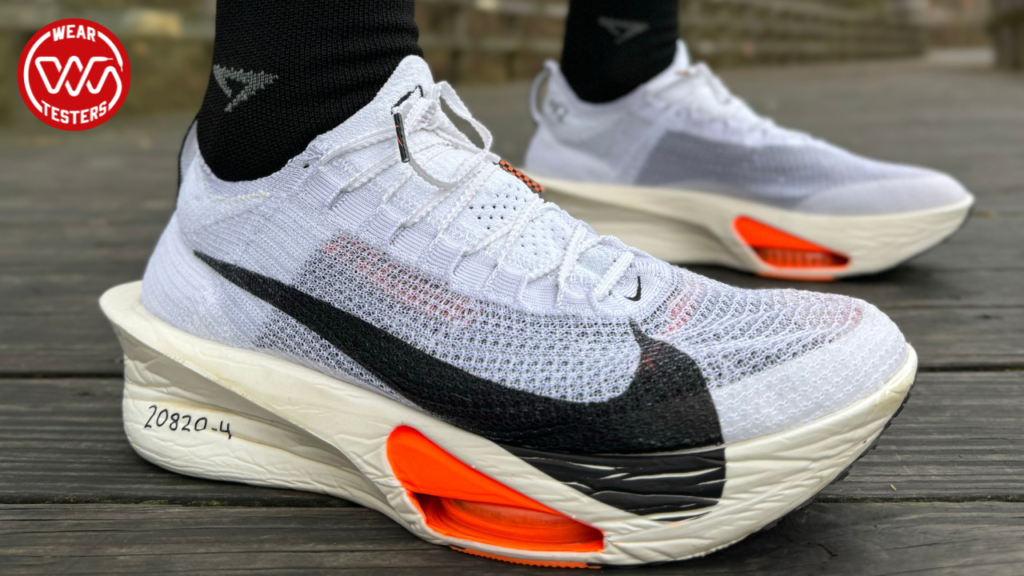
Nike Alphafly 3
The Nike Alphafly 3 is the best Alphafly to date and its super bouncy nature makes it easy to maintain marathon pace. It’s more accommodating and comfortable than previous models and includes a less pronounced arch (but it’s still ever-present). It’s still not a very stable shoe around corners and a lot of the heel material is cut away so hard heel strikers will have better options. The price is high, but if you miss the original Alphafly magic, you’ll get most of it back by wearing the Alphafly 3. Read the full review.
Fit: True to size, Drop: 8mm, Price: $285
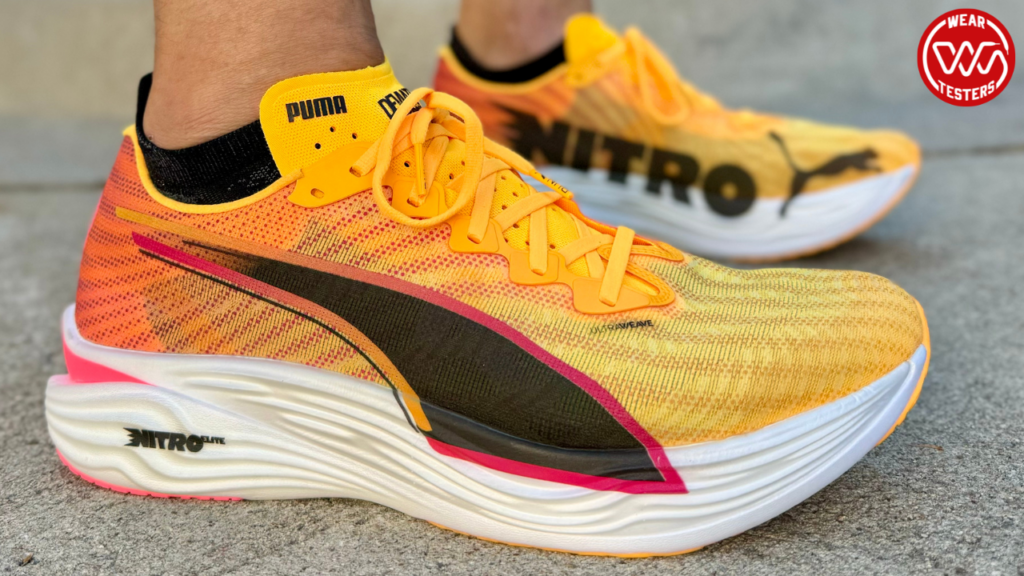
Puma Deviate Nitro Elite 3
The Puma Deviate Nitro Elite 3 is huge step forward for Puma’s racing line. It’s $20 less than most race days shoes that sit at $250 but performs just as well. It’s much lighter than the previous version dropping over 2 ounces, the bounce is upgraded, and Pumagrip, as always, is reliable in all conditions. The Ultraweave upper is breathable but very strong and helps keep the foot on the footbed while ripping around corners. And while it’s not the most stable marathon shoe, it’s now a great option for race day due to the weight savings and increased pop from the Nitro Elite and PWRPLATE combo.
If you want a soft, bouncy, fun, and dependable long distance racing shoe that’s not in the $250+ price bracket you won’t be able to do better than the Deviate Nitro Elite 3.
Fit: True to Size, Drop: 8mm, Price: $230
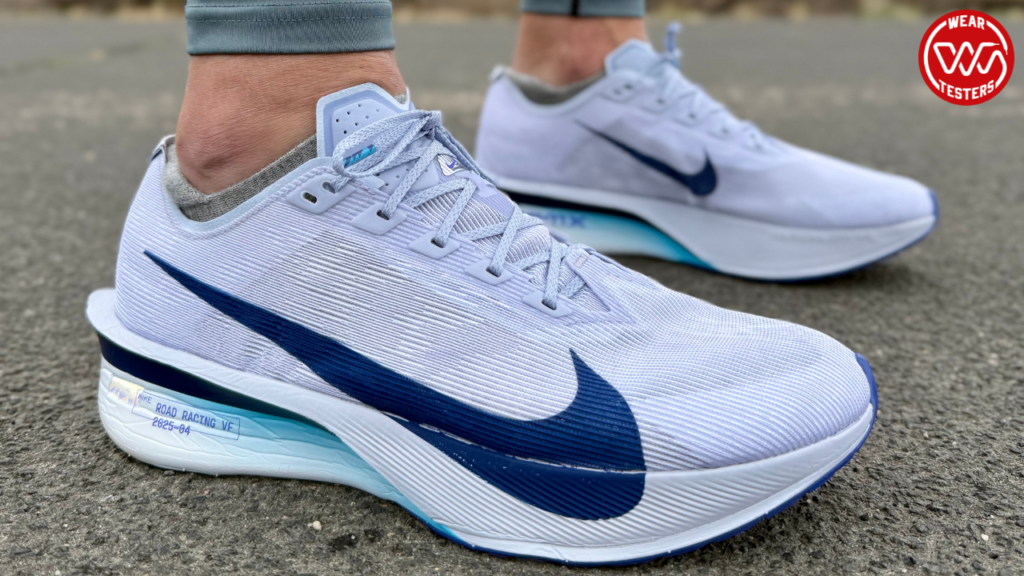
Nike Vaporfly 4
The Nike Vaporfly 4 is not the Vaporfly you’re used to, but it’s just as ready to race. It offers plenty of super shoe Pros, such as it being the lightest Vaporfly yet, a bouncy and poppy ZoomX midsole, a more streamlined on-foot feel, and a highly breathable and comfortable upper.
While the Vaporfly 4 is a solid value for the price, its Cons include a lack of support, a low-volume and not super accommodating race fit that isn’t wide-foot friendly, and an underfoot feel that may cap out at the half marathon for some runners.
The Nike Vaporfly 4 is best used for road races from the 5K to the marathon (though, again, some may need more support for the full marathon distance) as well as track work, long pace workouts, intervals, or anything else that requires driving those knees forward. For a more detailed rundown of the Nike Vaporfly 4, read the full review.
Fit: True to size, Drop: 6mm, Price: $260
Best Marathon Running Shoes for Racing: Tier 2
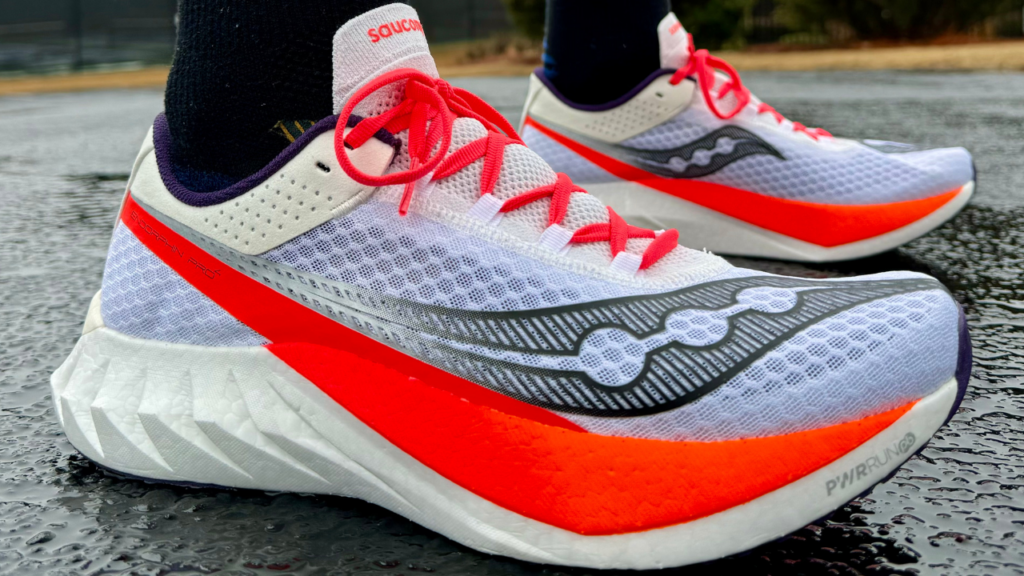
Saucony Endorphin Pro 4
The Saucony Endorphin Pro 4 is more accommodating than previous models and mirrors the fit of the Endorphin Speed 4. The bounce from the PWRRUN PB and carbon plate combo is smooth and propulsive. The built-in knit tongue is comfortable and the entire upper is more pliable and feels better on foot. If you used the Pro 3 as your preferred marathon shoe, the experience only got better. You’ll enjoy the changes and feel as fast as ever. Read the full review.
Fit: True to Size, Drop: 8mm, Price $225
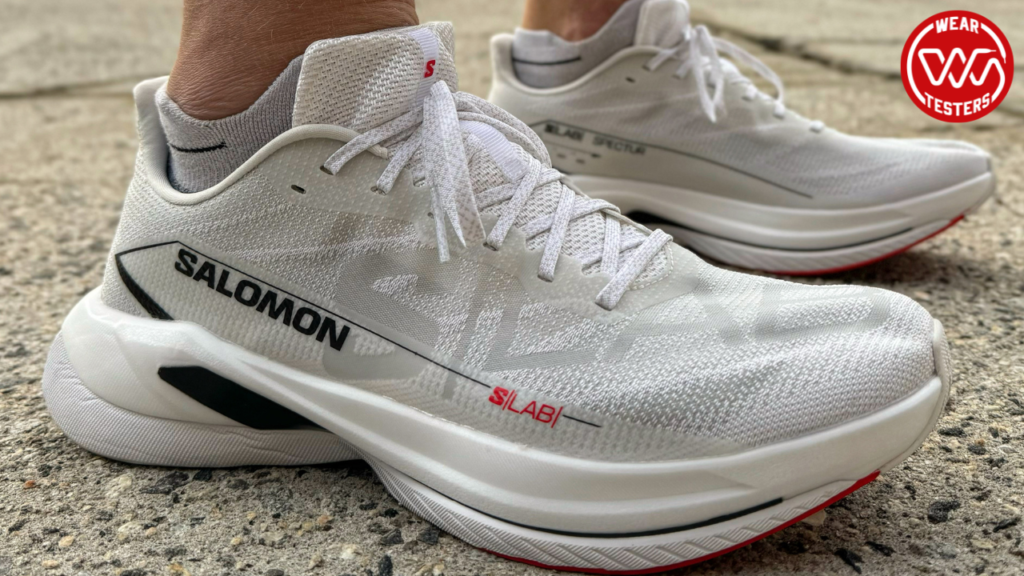
Salomon S/Lab Spectur
The Salomon S/Lab Spectur is aimed at runners with marathon times above three hours. It does that by adding extra stability and comfort for runners who will be on the course a bit longer. And it works. Salomon effectively created a marathon shoe that still offers great bounce but a better build to withstand all the issues (like form breakdown) inherent with so much time on feet. At $220, it’s a great value and delivers a better experience for the majority of marathon runners. Read the review.
Fit: True to size, Drop: 8mm, Price: $220
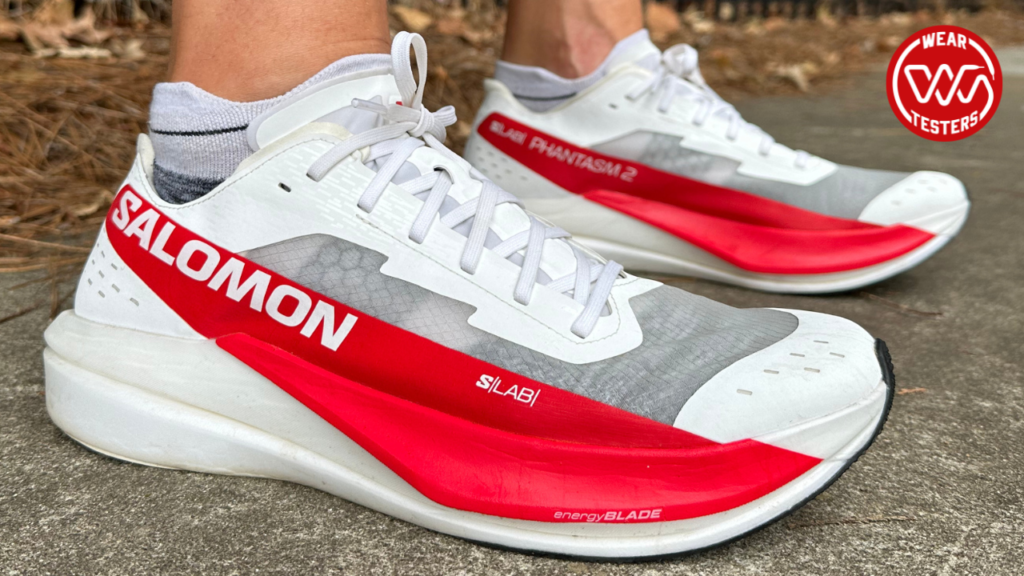
Salomon S/Lab Phantasm 2
The Salomon S/Lab Phantasm 2 is a solid first marathon shoe for the brand. It’s lightweight, has great bounce, fantastic traction, and is way more stable than expected. But it needs to be more accommodating and be priced lower. The Phantasm 2 is a throwback super shoe that feels similar to the original Vaporfly while adding awesome traction and tongue padding. So if you want that early super shoe feeling back, this is for you. Read the review.
Fit: Go down a half size, Drop: 9mm, Price: $275
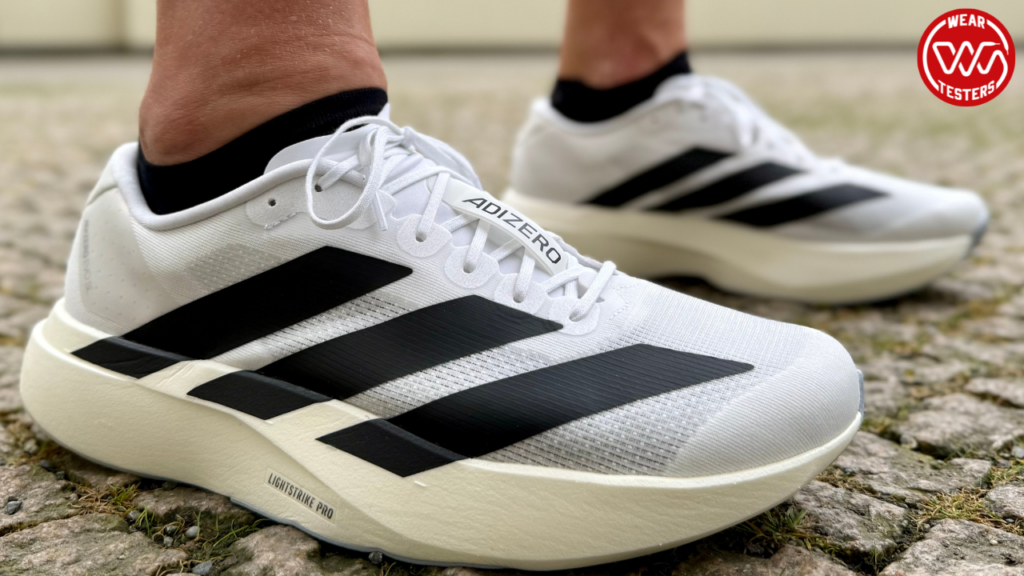
adidas Evo SL
Between its high-but-not-max stack height and its unbelievably reasonable $150 price tag, adidas is set to rewrite the super trainer playbook with the Evo SL. Rather than proving its performance chops via a jacked up midsole and a jacked up price to match, the Evo SL takes the best from models like the Adios Pro Evo 1 and the Adios Pro 3 to make one of the most exciting, versatile, and value-packed trainers to date.
The Evo SL features a high-performing and durable Continental Rubber outsole, a simple, but very effective engineered mesh upper (whose only flaw was a slippy tongue), a small midfoot shank, and a lively, full-length Lightstrike Pro midsole. Much of the setup mirrors that of the Adios Pro 3 (minus that shoe’s carbon rods). But the Evo SL adopts its rocker geometry from the exceptional Pro Evo 1, placing the rocker point farther back. The result is a shoe that’s bouncy yet stable, great at daily running, and also makes going fast feel easy. Despite its lack of a stiffening element like a plate or rods, the Evo SL has an elite toe-off that competes with shoes well above its price point, making it a perfectly viable (and affordable) option for those looking to go carbonless on race day.
We’d recommend going with your typical adidas size with regard to length (often a half size down from your size in other brands), and the forefoot room makes the Evo SL one of the more wide foot friendly adidas models. However, those who need more space at the rearfoot may need to try it on, as the Evo SL narrows at the heel. See the full review.
Fits: Typical adidas, Drop: 6.5mm, Price: $150
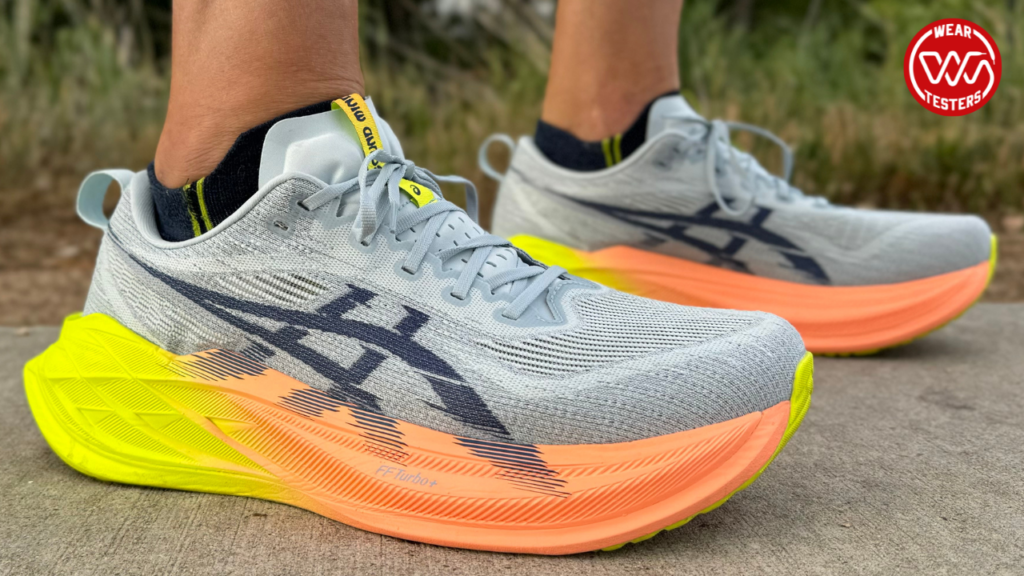
Asics Superblast 2
The Asics Superblast 2 is an all around improvement from last year’s cult classic. It’s versatile enough to handle anything a runner needs to do including easy runs, tempo runs, speed work, and race days. It’s wide foot friendly with an accommodating engineered woven mesh upper that molds to your feet. The traction, stability, durability, and breathability are all top notch. And the great upper sits on top of a soft yet bouncy FF Turbo+/FF Blast Plus Eco midsole that delivers a fantastic ride. The Superblast 2 doesn’t have any glaring negatives (a rare occurrence in the shoe reviewing business). It’s one of the best shoes on the market. See the full review.
Fit: True to Size, Drop: 8mm, Price: $200
Can I Run a Marathon in Everyday Running Shoes?
Yes, you can. For many people, that’s the best plan. Typically, it’s better to run a marathon in a shoe you’ve worn regularly during training and feel comfortable in. This limits potential issues (like blisters or bruised toenails) on race day because your shoes already handled the long grueling runs you did during your marathon training.
A good place to start looking is our list of the Best Long Distance Running Shoes. All of the shoes on that list can go the marathon distance when needed.
If you buy one of the marathon racing shoes on this list, be sure to mix it into your training and use it for both some speed work and long runs. The idea is to break the shoes in enough that they mold to your feet (to avoid any painful rubbing during the race) but at the same time, save the cushioning, so it’s still super bouncy on race day. Your legs will appreciate the extra bounce or plushness as you work to maintain your marathon pace for 26.2 miles.
Best Marathon Running Shoes Now on Sale
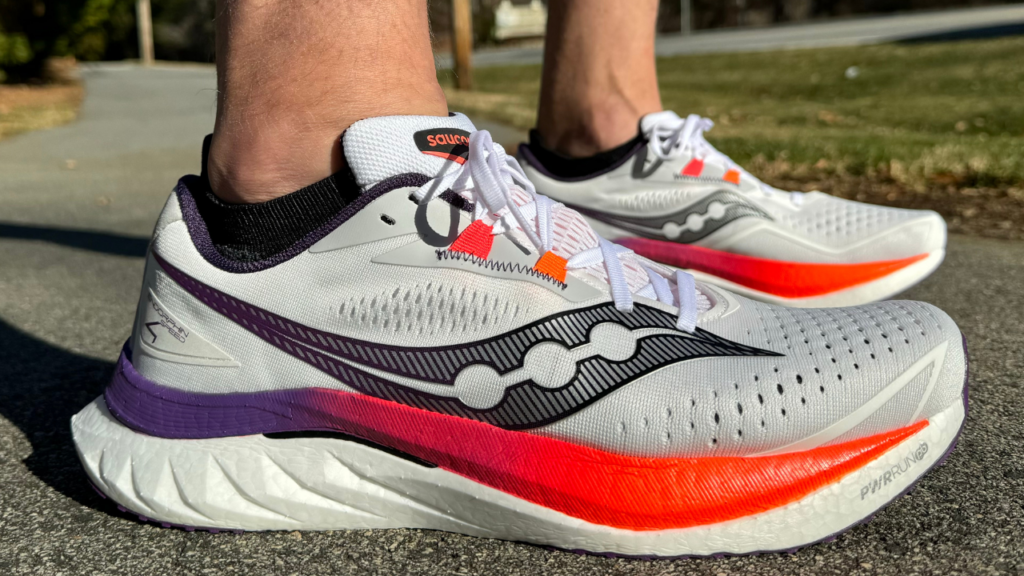
Saucony Endorphin Speed 4
The Saucony Endorphin Speed 4 continues to be the best shoe in Saucony’s line despite a full aesthetic overhaul. There’s something about the way the TPU plate, Saucony’s Speedroll rocker, and the PWRRUN PB work together. It’s magic on speed days and really earns the Speed name. Despite a more narrow toebox, the Endorphin Speed 4 is one of the most versatile shoes on the market. And, if you don’t like carbon-plated shoes, the Speed 4 is a great option for race day. Read the full review.
Fit: True to size, Drop: 8mm, Price $170
Best Marathon Running Shoes – Coming Soon
Nothing right now
Thinking of a shoe we should add to the best marathon running shoes list? Comment below or message us on Instagram or Twitter.



Hi,
Which do you prefer out of the Saucony Pro 3 and NB SC elite v3? Which would be more stable and faster shoe and better for 5km to marathon distance. Thanks in advance.
Steve
That really comes down to personal preference around fit. Both are fairly stable with the NB SC Elite v3 being a bit more plush/cushy. The EP3 is more of a traditional running shoe upper while the NB SC Elite v3 is a sock-like fit. I’d say the Saucony Endorphin Pro 3 is the more popular shoe but performance wise they offer similar benefits.